


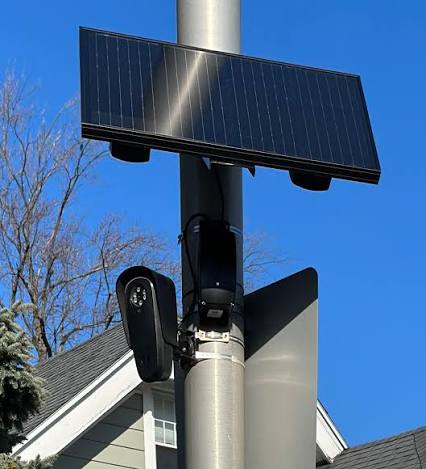
Traffitech GH automates traffic law enforcement. It was introduced by the Ministry of Interior and the Ghana Police Service. Traditional manual policing methods often struggle against high vehicle volumes. Therefore, this automated architecture detects infractions using high-resolution cameras and sensors.
Urban mobility challenges demand advanced technological interventions. Traffitech GH represents a technological system deployed to manage road transport and enforce traffic regulations across Ghana.
Understanding the Framework
The Ministry of Interior and the Ghana Police Service introduced Traffitech GH to automate traffic law enforcement.
According to reports from the Building and Road Research Institute (BRRI), automated enforcement systems reduce road fatalities significantly by targeting speeding and red-light violations. Researchers at the Kwame Nkrumah University of Science and Technology (KNUST) published studies indicating that automated monitoring alters driver behavior positively. Scientific publications in the Journal of Transportation Safety corroborate that visible camera enforcement decreases intersection collisions by up to thirty percent.
Core Functions of the System
The platform performs several automated tasks to maintain road safety standards.
- License Plate Recognition: High-speed cameras capture vehicle registration numbers accurately.
- Speed Detection: Radar units measure vehicle velocity against legal limits.
- Automated Offense Recording: The software documents timestamps, photographic evidence, and location data.
- Digital Notification: Vehicle owners receive SMS alerts detailing their infractions and fines.
| Feature | Functionality | Impact |
|---|---|---|
| Optical Sensors | Captures images of traffic violations | Provides undeniable evidence for enforcement |
| Central Database | Stores infraction logs securely | Integrates with Driver and Vehicle Licensing Authority (DVLA) |
| Automated Dispatch | Sends penalties directly to offenders | Eliminates physical confrontation during stops |
Recent Industry Developments
Recent announcements from the Motor Traffic and Transport Department (MTTD) highlight the expansion of Traffitech GH across major metropolitan corridors. Government sources indicate that pilot phases in Accra yielded positive compliance metrics. Case studies from similar deployments in South Africa, documented by the Council for Scientific and Industrial Research (CSIR), show a direct correlation between automated ticketing and reduced reckless driving incidents.
Municipal reviews suggest that citizens adapt quickly to automated systems once awareness campaigns clarify the penalty structures. Personal observation during field visits to operational zones reveals smoother traffic flows at monitored intersections, as motorists exercise greater caution near camera installations.
Frequently Asked Questions
How does Traffitech GH detect violations?
The system uses optical sensors, radar technology, and automatic number plate recognition software to capture traffic breaches instantly.
Where do motorists pay fines?
Offenders receive digital notifications with instructions to settle penalties through designated electronic payment channels integrated with the national banking system.
Can a driver contest a ticket?
Yes, the framework provides an administrative review process where vehicle owners submit evidence if a ticketing error occurs.
Does the system operate at night?
Infrared technology enables the cameras to capture clear images and detect speed infractions during low-light conditions and nighttime hours.


