


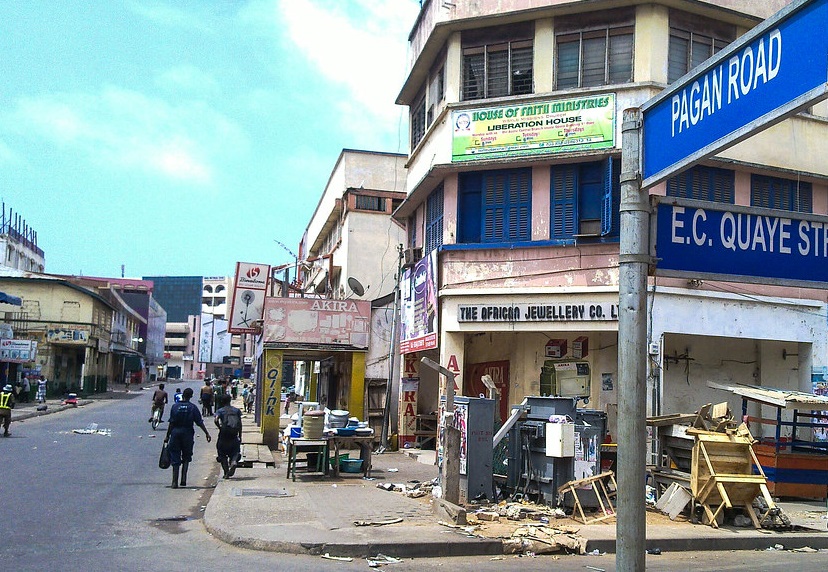
“Accra.” A name that rolls off the tongue, evoking images of bustling markets, sun-drenched beaches, and vibrant culture. But how does this word, the very heartbeat of Ghana, truly sound when spoken by its own people? It’s a question that delves into the subtle melodies of language, revealing not just a pronunciation, but a piece of national identity and linguistic heritage. While a visitor might articulate it with an English or American accent, the Ghanaian rendition of “Accra” carries a distinct rhythm, a unique intonation that is unmistakably local.
THE INTRICATE PHONOLOGY
At its most widely accepted, the Ghanaian pronunciation of “Accra” is a delightful blend of crisp consonants and rich vowels. Let’s break it down:
The initial ‘A’: Often pronounced like the ‘a’ in “father” or “car” – a strong, open /ɑː/ sound, rather than the softer ‘uh’ of “about” or the ‘ay’ of “apple.” So, it starts with an emphatic “Ah-“.
The ‘cc’: This is a clear, hard ‘k’ sound, just like in “kick.” There’s no ambiguity here.
The ‘r’: This is where the magic truly unfolds. Unlike the often soft, retroflex ‘r’ of American English or the non-rhotic ‘r’ of
British English (where it’s often dropped at the end of words or before consonants), the Ghanaian ‘r’ is typically a tapped or flapped ‘r’ (IPA: /ɾ/). It’s similar to the ‘tt’ sound in American English “butter” or the ‘r’ in Spanish “pero.” It’s light, quick, and distinct, giving the word a swift, almost melodic transition.
The final ‘a’: Again, like the initial ‘A’, it leans towards the open /ɑː/ sound, a full “ah” rather than a muted “uh.”
So, when a Ghanaian says “Accra,” you’re typically hearing something close to “Ah-KRRAH” – with that distinctive, almost flicking ‘r’ sound in the middle. The stress usually falls on the second syllable, emphasizing “Ah-KRRAH.”
While “Ah-KRRAH” remains the dominant form, Ghana’s rich tapestry of over 80 indigenous languages means there are subtle, charming variations. These nuances are often minute, almost imperceptible to the untrained ear, yet they add a layer of authenticity and local flavor, reflecting a speaker’s linguistic background.

EACH TRIBE HAS ITS OWN PRONUNCIATION
Ga Speakers: As the traditional custodians of Accra (the name itself is Ga for “ants,” referring to the density of the population), Ga speakers might infuse it with a slightly different tonal quality, reflecting the inherent musicality of their mother tongue. The vowel sounds might be purer, less influenced by English phonology.
Akan (Twi, Fante) Speakers: For Akan speakers, the influence might be in the intonation, a gentle rise and fall that’s characteristic of their language. The ‘r’ might maintain its tapped quality, but the surrounding vowels can take on a subtly different hue.
Ewe Speakers: From the Volta region, Ewe speakers might pronounce it with a slightly different rhythm, sometimes a clearer distinction between the two ‘a’ sounds, or a subtly stronger emphasis on the ‘r’.
These renditions are not mispronunciations; they are accents, gentle whispers of a speaker’s linguistic roots that enrich the overall sound.
SUMMARY
Ultimately, how Ghanaians say “Accra” is more than just a sequence of sounds. It’s a testament to the country’s vibrant linguistic landscape, spoken with a certain pride and familiarity that turns a geographic name into a heartfelt greeting of home. When you hear a Ghanaian say “Accra,” you’re not just hearing a name; you’re hearing the heartbeat of a nation, articulate and alive, echoing through its streets and across its proud land.


