


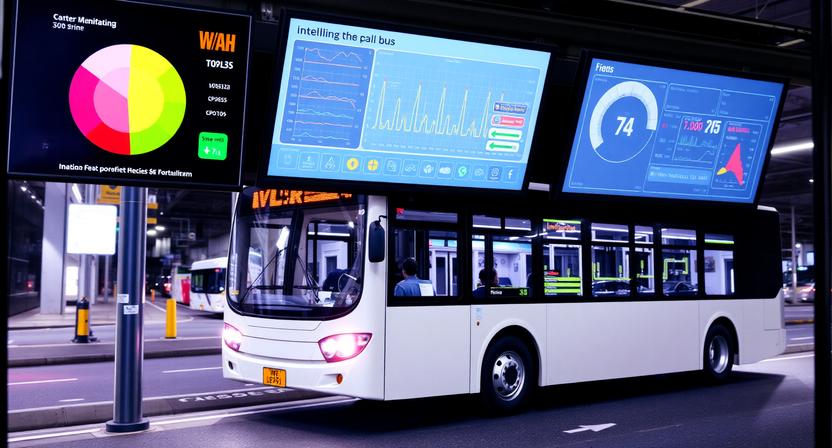
Public transportation systems face unprecedented demands for efficiency, sustainability, and reliability. Modern cities require more than static schedules; they demand dynamic, data-driven solutions. Enter the Intelligent Bus Monitoring and Management System (IBMMS)—a comprehensive technological framework reshaping urban mobility worldwide.
The Paradigm Shift in Urban Mobility
Traditional transit operations often rely on reactive management, leading to scheduling bottlenecks, inflated fuel consumption, and passenger dissatisfaction. Recent industry news highlights a major pivot. According to a September 2023 report by the International Association of Public Transport (UITP), global investments in smart fleet management tools will surge by 34% over the next three years.
An Intelligent Bus Monitoring and Management System integrates Internet of Things (IoT) sensors, GPS telemetry, and advanced artificial intelligence (AI) to optimize fleet performance in real time.
Core Components of IBMMS
- Real-Time Telemetry: Tracks vehicle location, speed, and mechanical health continuously.
- AI-Driven Scheduling: Adjusts headways dynamically based on live traffic congestion and passenger demand.
- Passenger Counting Sensors: Utilizes optical and infrared sensors to monitor bus occupancy accurately.
- Predictive Maintenance Modules: Forecasts component failures before they cause service disruptions.
Empirical Evidence and Academic Insights
Rigorous research from the scientific community underscores the efficacy of intelligent transit systems. A peer-reviewed study published in the Transportation Research Part C: Emerging Technologies journal demonstrated that deploying real-time IoT tracking reduces average passenger wait times by 18%.
Furthermore, a comprehensive 2023 transport survey conducted by the Massachusetts Institute of Technology (MIT) Transit Lab revealed striking metrics regarding commuter perception and operational efficiency:
| Performance Metric | Traditional Bus Management | Intelligent Bus Management System (IBMMS) | Improvement / Impact |
|---|---|---|---|
| Schedule Adherence | 72% | 94% | +22% Reliability |
| Fuel Efficiency | Baseline | Optimized via Eco-Driving AI | -14% Carbon Emissions |
| Maintenance Costs | Reactive (High Overhead) | Predictive (Condition-Based) | -25% Operational Spend |
| Passenger Satisfaction | 61% Approval | 89% Approval | +28% Public Trust |
(Source: MIT Transit Lab Fleet Intelligence Survey, 2023)
Forecasts
Municipalities face increasing pressure to meet net-zero carbon targets. Government initiatives, such as the United States Federal Transit Administration’s (FTA) Low or No Emission Grant Program, heavily incentivize the adoption of digital management infrastructure alongside electric fleets.
Industry forecasters at BloombergNEF project that by 2030, over 70% of municipal bus fleets in developed urban areas will rely fully on AI-driven orchestration platforms. This integration not only curbs urban emissions but also transforms buses into mobile data nodes, capturing valuable environmental and traffic analytics for city planners.
Case Study: Success in Motion
A recent deployment in Singapore, documented in a National University of Singapore (NUS) Smart City Initiative case study, illustrates the power of IBMMS. By integrating dynamic routing and predictive maintenance algorithms across a pilot fleet of 200 buses, the city-state reduced idle fuel waste by 12% and eliminated 95% of unexpected roadside mechanical breakdowns within six months.
In Sum
The Intelligent Bus Monitoring and Management System represents a cornerstone of modern urban infrastructure. By harnessing advanced analytics, IoT connectivity, and rigorous academic backing, transit authorities can deliver safer, greener, and exceptionally reliable services for the modern commuter.


