


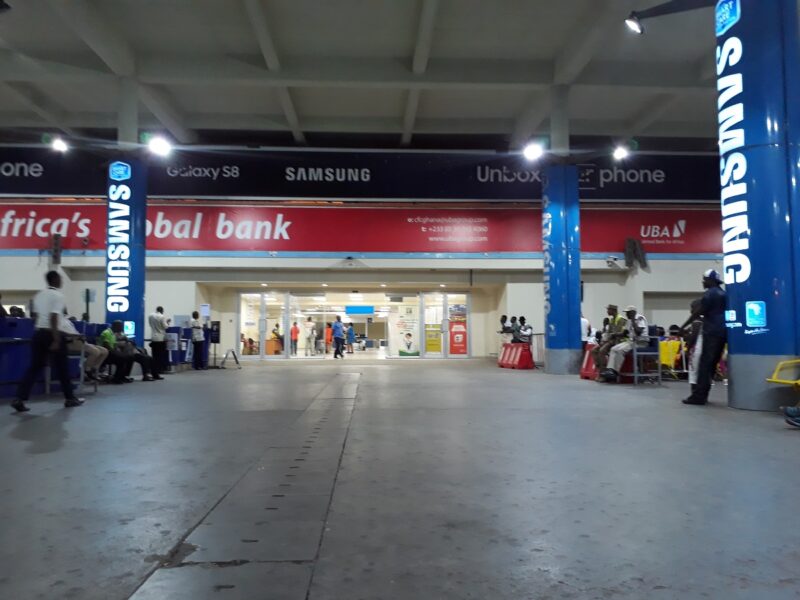
Kotoka International Airport (KIA), Accra’s primary international gateway, holds a distinction beyond its function as a logistics center. Unlike many major hubs named for geography or abstract ideals, KIA’s designation immediately invokes a critical, turbulent epoch in Ghanaian history. The name honors General Emmanuel Kwasi Kotoka, an individual whose actions fundamentally altered the nation’s political trajectory.
BACKGROUND TO THE NAMING
To understand the airport’s namesake, one must revisit February 24, 1966. On that date, then-Lieutenant Colonel Emmanuel Kotoka, collaborating with Major A.A. Afrifa and others, executed a decisive military coup. They successfully overthrew the regime of Kwame Nkrumah. The plotters specifically cited Nkrumah’s increasingly autocratic administration, severe economic mismanagement, and repression of political opposition, executing the coup under the authority of the newly formed National Liberation Council (NLC).
THE RENAMING OF ACCRA AIRPORT
As the coup’s operational leader and a subsequent key figure in the NLC government, Kotoka quickly earned widespread recognition as a liberator. A significant portion of the populace viewed his central role in dismantling Nkrumah’s single-party rule and reinstating multi-party democracy as a heroic necessity, freeing Ghana from perceived encroaching dictatorship.
In recognition of his leadership in this “liberation,” the new authorities swiftly renamed Accra Airport to Kotoka International Airport shortly after the takeover. This action served as a powerful, permanent gesture, inscribing the name of the man who profoundly impacted the nation onto its most vital international connection. It cemented a memorial to his perceived heroism and the monumental change he ushered in.
A COMPLEX AND TRAGIC LEGACY
General Kotoka’s tenure, however, proved tragically brief. Less than a year later, on April 17, 1967, Lieutenant Arthur and others launched an attempted counter-coup. Kotoka died defending the very government he helped install, solidifying a complex legacy.
The situation today
Today, Kotoka International Airport still stands, cementing the memory of this turbulent era. While historical interpretation of the 1966 coup remains a robust debate, the airport’s name ensures that General Emmanuel Kwasi Kotoka—a figure whose brief but impactful role irrevocably shaped Ghana’s political landscape—will forever define the nation’s primary aviation gateway.


