


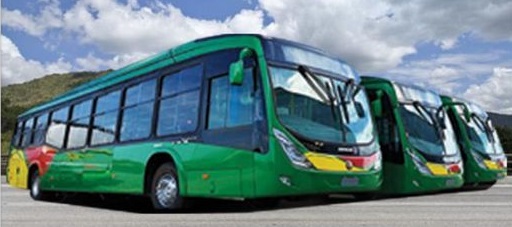
Far from being the initiative of a single entity, the project was a multifaceted undertaking involving a collaboration of local government bodies and international development partners, all working towards a common goal of enhancing urban mobility in the capital Accra. The introduction of the Aayalolo Bus Rapid Transit (BRT) system in Ghana marked a significant milestone in the country’s efforts to modernize its urban transportation infrastructure.
The idea to create an urban transit system
At its core, the Aayalolo system was conceived under the broader framework of the Ghana Urban Transport Project (GUTP). This ambitious project, initiated by the Government of Ghana, primarily through its Ministry of Transport, aimed to address the growing challenges of traffic congestion, inefficient public transport services, and environmental pollution in the Greater Accra Metropolitan Area. The vision was to provide a structured, reliable, and comfortable mass transit alternative for the city’s burgeoning population.
Crucial to the realization of Aayalolo was the substantial financial and technical backing from international development organizations. The World Bank, through its International Development Association (IDA) credit, emerged as a primary financier of the Ghana Urban Transport Project, which encompassed the BRT component. This funding was instrumental in covering costs related to infrastructure development, bus procurement, and institutional capacity building.


Partners who funded the programme
The Government of the Netherlands played a significant role, particularly in the early conceptual and planning stages. Dutch expertise and financial assistance contributed to the feasibility studies, design, and strategic guidance for establishing an effective BRT system. Their experience in urban planning and public transport systems provided valuable insights that shaped the project’s direction.
To manage and operate the Aayalolo system, the Ghanaian government established the Greater Accra Passenger Transport Executive (GAPTE). GAPTE was created as the dedicated agency responsible for the overall planning. The organization also oversees regulation and coordination of the BRT operations. This function includes route management, fare collection, and passenger information systems.
Conclusion
The Government of Ghana and other agencies provided critical technical and advisory support to ease transportation in the capital. This collaborative effort brought to fruition Ghana’s first modern, managed bus system in the capital, aiming to transform urban commuting for thousands of residents.


