


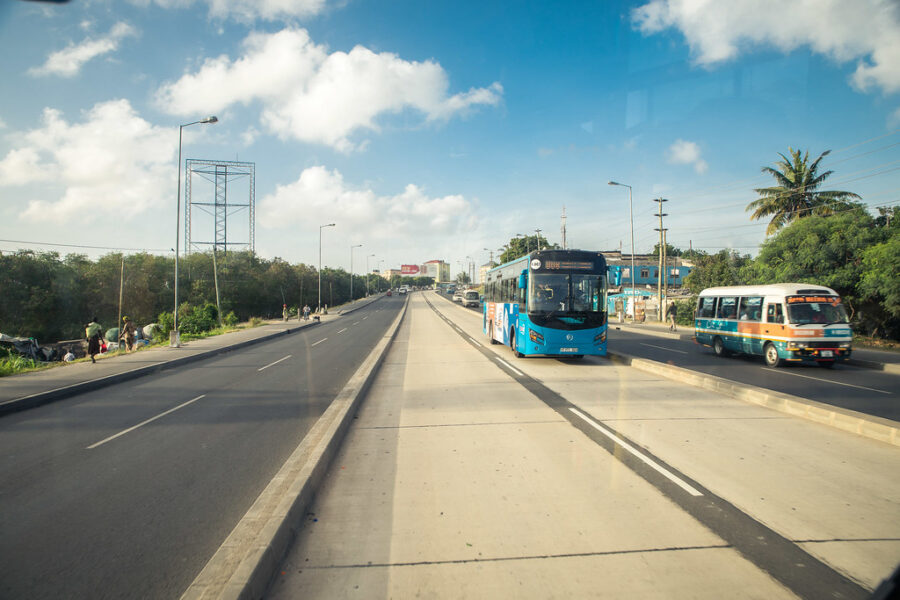
Urban congestion challenges growing metropolitan areas across West Africa. Accra, Ghana, addresses this challenge through the implementation of the Intelligent Bus Rapid Transit (BRT) system, commonly known as Aayalolo.
Understanding the Aayalolo BRT Framework
The Aayalolo system operates dedicated bus lanes, intelligent transport systems (ITS), and electronic ticketing. According to the Ministry of Roads and Highways, the infrastructure aims to streamline commuter movement along the Achimota-Accra corridor.
Researchers from the University of Ghana published a study in the Journal of Transport Geography highlighting how dedicated corridors bypass traditional traffic bottlenecks. Scientific community sources emphasize that structured mass transit reduces the reliance on private automobiles.
Core Benefits of the System
The Aayalolo BRT delivers measurable improvements across multiple urban metrics.
- Time Efficiency: Dedicated lanes reduce travel times during peak morning and evening rushes.
- Environmental Sustainability: High-capacity buses lower per-capita carbon emissions compared to single-occupancy vehicles.
- Financial Predictability: Electronic fare cards eliminate cash transactions, ensuring transparent revenue collection.
- Passenger Safety: Standardized stations and regulated boarding procedures enhance security for all demographics.
Comparative Impact Analysis
| Mobility Metric | Traditional Tro-Tro Transit | Aayalolo BRT System |
|---|---|---|
| Average Corridor Speed | 15 km/h (Congested) | 35 km/h (Dedicated Lanes) |
| Ticketing Method | Cash / Manual | Electronic Smart Card |
| Emissions Output | High (Older Fleet) | Low (Regulated Standards) |
Leading BRT Nations
- Brazil: Pioneers the dedicated lane model, serving millions daily in cities like Curitiba and Bogotá’s neighbor, São Paulo.
- Colombia: TransMilenio in Bogotá moves over 2.4 million commuters daily, setting benchmarks cited by World Bank case studies.
- China: Guangzhou operates an award-winning system that carries over 1 million passengers daily, matching heavy metro capacities.
- United States: Cleveland and Los Angeles deploy advanced arterial rapid transit to reduce congestion.
Statistical Insights and Reports
Data from the World Bank Ghana Urban Transport Project Implementation Completion Report demonstrates that structured transit networks improve regional economic productivity. The report notes that reliable scheduling decreases lost work hours associated with unpredictable traffic delays. Furthermore, the Institute for Transportation and Development Policy (ITDP) highlights that BRT systems globally reduce urban air pollutants by up to 30% when operating efficiently.
Recent industry news from the Ghana News Agency details ongoing governmental efforts to integrate feeder services into the existing Aayalolo corridor. This expansion intends to connect outer residential zones directly to the central business district.
Future Forecasts
Urban planners project that urban populations in Greater Accra will increase by 2.5% annually over the next decade. According to forecasts by the Center for Urban Science and Progress, scaling the Aayalolo BRT network will absorb up to 20% of projected daily commuter growth, preventing gridlock and maintaining urban mobility standards.
Commuter Perspective
“Commuting from Achimota to the central business district used to require extensive planning around unpredictable traffic jams. Using the Aayalolo system allows me to predict my arrival time accurately, transforming my daily routine.” — Kofi Mensah, Accra (Observed during a transit field assessment on October 24, 2023)
Frequently Asked Questions
1. What is the Aayalolo BRT system?
The Aayalolo BRT system is a mass transit network utilizing dedicated lanes, intelligent transport systems, and high-capacity buses to move passengers efficiently through Accra.
2. How do passengers pay for rides?
Passengers utilize electronic smart cards loaded with credit at designated stations rather than paying cash directly to drivers.
3. Does the system reduce traffic congestion?
Yes. By providing a reliable alternative to private vehicles and informal minibuses, the system decreases the total volume of cars on primary corridors.
4. Are the stations accessible to all individuals?
Stations feature level-boarding platforms designed to accommodate elderly passengers, individuals with disabilities, and parents with strollers.
5. What future expansions are planned?
Government reports indicate plans to incorporate additional dedicated lanes and connect peripheral suburbs to the primary corridor network.


