


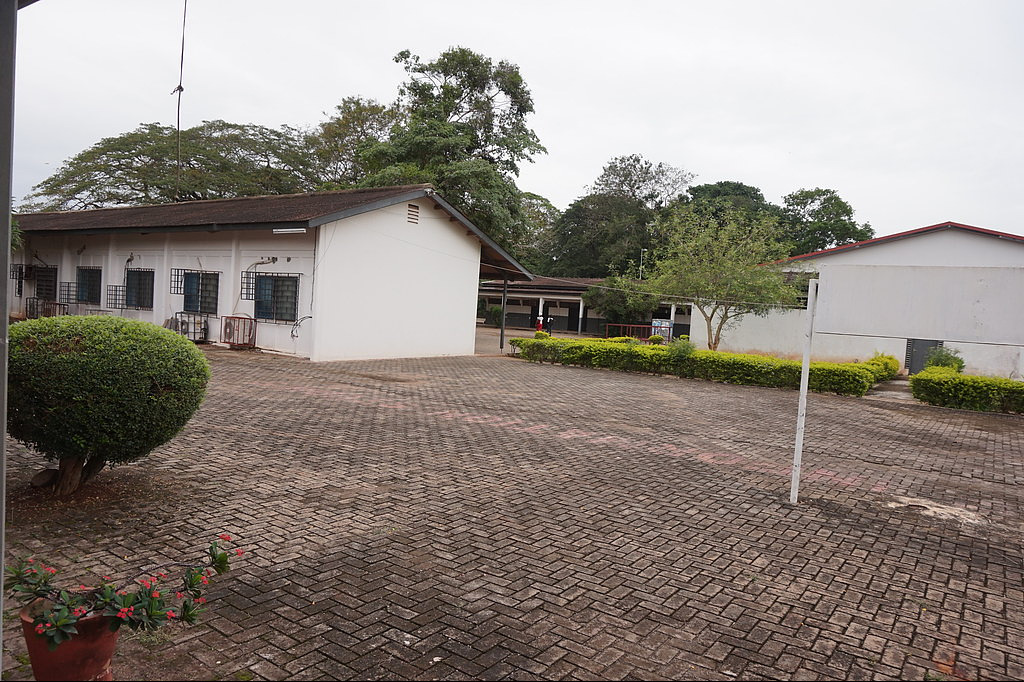
An overview of the major tertiary tertiary educational educational institutions in the capital of Ghana. Please see the profiles and history of these academic centers and their founders.
University of Ghana
Established as the institution College of the Gold Coast by Ordinance on August 11, 1948, it is the leading institution in the country, with the mission of delivering and advancing higher education, research, and learning. The university is governed by a strategic plan and is positioned to stand out in the fields of research, teaching, and learning as well as have an influence both nationally and internationally.
Regional Maritime University
An international university is the Regional Maritime University. On October 25, 2007, she became a full member of the university. The former Nautical College, which was founded in 1958 to provide rating training for the State Shipping Corporation, now houses the RMU.
Methodist University College
In this country, a private university is called The Methodist University. It is situated in the Greater Accra Region, in Accra. MUCG began academic operations in October 2000, having been founded in October 2000, following its August certification by the National certification Board. November 2000 marked the first student cohort to report for lectures, while October 2001 marked the second class..
Regent University College
The capital of Ghana is home to the Regent University College of Science and Technology. It was incorporated in September 2003 and granted authorization to function as a postsecondary establishment in 2004. Thirty pioneer students attended the lectures at Trinity Campus in Mataheko beginning in January 2005.
Heritage Christian College
This institution, which receives support from the Churches of Christ, offers advanced study in a range of academic subjects to both citizens and foreigners.
Zenith University College
Founded in December 2001, Zenith Institution College is a privately held educational establishment located here Initially, Zenith functioned as a tutoring college for several international colleges. As of November 2005, Zenith is a recognized higher education schoo, having received accreditation to offer undergraduate, graduate, and certificate programs.
Ghana Institute of Journalism
Formerly known as the Ghana Institute of Journalism. The Ghana Institute of Languages, the National Film and Television Institute, and the former Institute of Journalism have merged to become the University. The National Accreditation Board has granted the institute accreditation.
Advanced Business University College
Accredited postsecondary institution Advanced Business College is now accepting applications for bachelor’s degree programs.
Ghana Institute of Management and Public Administration
As a combined national/United Nations special fund initiative, this institution founded in 1961. Originally founded as the Institute of Public Administration, it was one of the major strategic organizations tasked with creating the public administrative system, preparing civil servants for professional and administrative roles, and organizing and managing local, regional, and national services. Every mandate upheld the Institute’s standing as the national center for management development and the study of public administration.

National Film and Television Institute
By virtue of Supreme Military Council Decree 151 of 1978, the National Film and Television Institute was founded as a public institution of higher learning in 1978. In 1998, NAFTI updated its three-year diploma programs to four-year degree programs with Legon. The Institute now grants Bachelor of Fine Arts degrees.
HIGHER EDUCATION IN GHANA
Completing post-secondary education typically takes four years. While some students must pay for their study at a private institution, the brightest students continue their studies at a state university for what is ostensibly free. There is also a variety of post-graduate programs offered. By promoting the importance and independence of accreditation, recognizing accrediting bodies, and upholding a commitment to excellence in higher education, the Council for Higher Education Accreditation benefits its members, students, and society at large.
COMMON COURSES TAUGHT
- Business
- Business administration
- Computer Science
- Economics
- Electrical engineering
- Finance
- Information technology
- Mathematics
- Nursing
- Political science


