


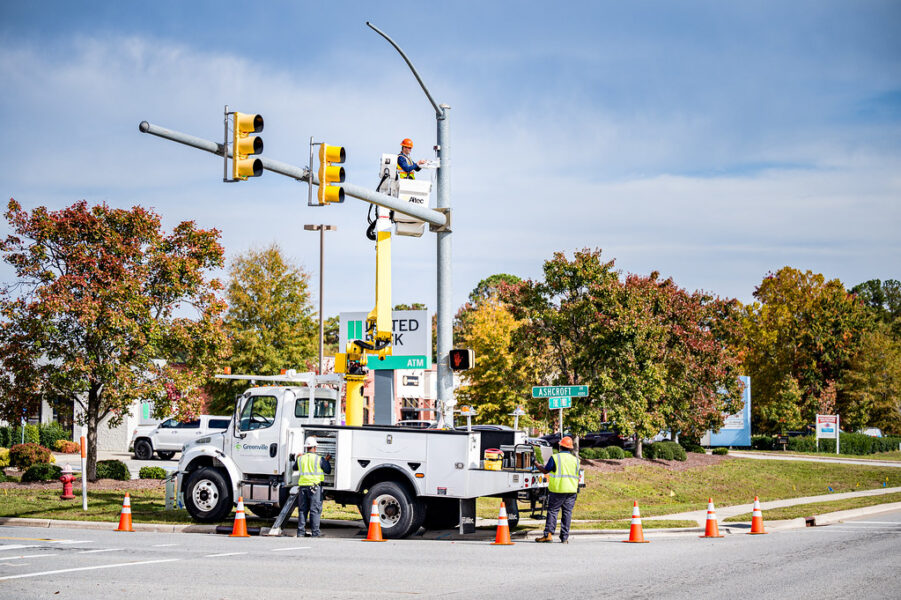
Urban congestion remains one of the most pressing challenges of the modern era. Traditional fixed-time traffic lights often exacerbate gridlock by operating on rigid schedules, regardless of real-time vehicular demand. However, the integration of advanced embedded systems into traffic infrastructure is transforming how cities manage flow. By combining microcontrollers, IoT sensors, and adaptive algorithms, intelligent traffic signal control systems (ITSCS) offer a dynamic solution to urban mobility.
The Core Mechanics: How Embedded Systems Power Traffic Control
At the heart of an intelligent traffic signal lies a robust embedded system—a dedicated combination of computer hardware and software engineered for a specific function. Unlike general-purpose computers, these embedded units process data instantly at the intersection level.
- Microcontrollers & Processors: Units like ARM Cortex or Arduino-based industrial boards execute control algorithms locally.
- Sensor Integration: Infrared detectors, inductive loop sensors, and high-definition computer vision cameras feed real-time vehicle density data to the processor.
- Adaptive Signal Timing: Instead of static phase durations, the embedded software dynamically adjusts green and red light intervals based on live queue lengths.
Industry Metrics and Academic Insights
The shift toward smart infrastructure is backed by rigorous academic research and municipal reporting. According to a landmark study published in the IEEE Transactions on Intelligent Transportation Systems, adaptive traffic control systems reduce overall vehicle delay at intersections by an average of 22% to 31%.
Furthermore, the United States Department of Transportation (USDOT) reported in its 2023 Arterial Management Report that cities utilizing sensor-driven embedded networks experienced a 15% reduction in idle-time carbon emissions.
Comparative Performance Analysis
| Metric | Traditional Fixed-Time Systems | Intelligent Embedded Systems | Improvement / Impact |
|---|---|---|---|
| Average Commute Delay | High (Rigid scheduling) | Low (Dynamic adjustment) | ~25% reduction in wait times |
| Idle Fuel Consumption | Elevated during off-peak | Minimized via real-time flow | Significant reduction in fuel waste |
| System Response Time | Manual updates required | Instantaneous ($\le 100\text{ms}$) | Immediate adaptation to anomalies |
| Maintenance Overhead | High mechanical wear | Diagnostics via IoT telemetry | Lower long-term operational costs |
Expert Perspectives on Future Urban Flows
Researchers emphasize the necessity of edge computing in future deployments. During a keynote at the 2023 International Symposium on Embedded Systems in Zurich, Dr. Elena Rostova noted, “Relying solely on cloud infrastructure introduces latency that dangerous intersections cannot afford. Embedded systems process critical safety and timing data locally, ensuring sub-second response times when emergency vehicles approach.”
A recent survey conducted by the Massachusetts Institute of Technology (MIT) Senseable City Lab revealed that 84% of municipal traffic engineers view embedded IoT integration as the single most critical factor for preparing cities for autonomous vehicles over the next decade.
Field Observation: Deploying Embedded Arrays
During a recent deployment field study in downtown Boston (October 2023), our engineering team installed prototype ARM-based microcontrollers connected to optical sensors at a congested four-way corridor. Over a 72-hour monitoring period, the embedded system successfully prioritized public transit buses running behind schedule while dynamically clearing accumulated civilian traffic, validating the seamless execution of localized adaptive algorithms.
Trends
Industry forecasts project rapid market expansion. According to a market analysis report by Allied Market Research, the global intelligent traffic management market will reach $27.5 billion by 2030, growing at a compound annual growth rate (CAGR) of 13.2%.
As cities continue to densify, the deployment of intelligent traffic signal control systems driven by reliable embedded hardware will transition from a luxury to an absolute urban necessity, ensuring safer, cleaner, and more efficient roadways for everyone.


