


How to Master the MTA Bus System
Utilizing New York City’s vast public transportation network may seem daunting at first, but the Metropolitan Transportation Authority (MTA) bus system offers an efficient, scenic, and reliable way to traverse the five boroughs. Whether you are a daily commuter or a visitor exploring the city, understanding how to identify and track your bus route ensures a seamless travel experience.
Follow this guide to master NYC bus navigation and reach your destination with confidence.
1. Utilize Official Digital Tools
The most reliable way to navigate the MTA bus network is through the official digital resources provided by the city.
- MTA Trip Planner: Visit the MTA website and enter your current location and desired destination. The site calculates the most efficient route, including necessary transfers and estimated travel times.
- MTA Bus Time: This essential tool provides real-time tracking for every bus. By entering your route number or intersection, you can see exactly how many stops away your bus is. This feature minimizes waiting time at the curb and helps you avoid unnecessary delays.
- Third-Party Transit Apps: Applications such as Google Maps, Citymapper, and Transit integrate real-time MTA data. These apps provide step-by-step navigation, alert you to service changes, and suggest alternative routes if traffic impacts your primary path.
2. Identify Your Bus Route
NYC buses follow a standardized naming convention that simplifies route identification. Each route begins with a letter indicating the borough of origin:
- M: Manhattan
- B: Brooklyn
- Q: Queens
- Bx: The Bronx
- S: Staten Island
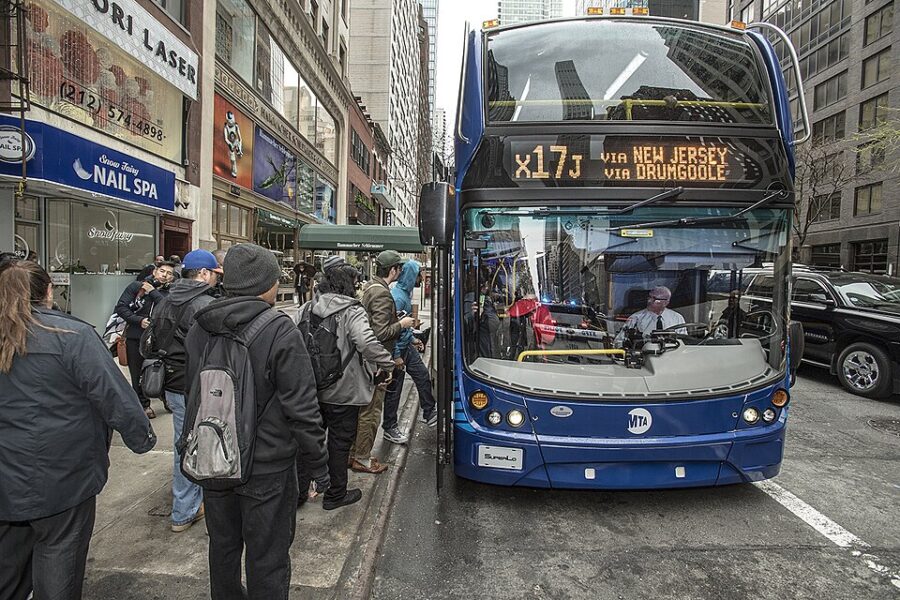
Buses also display their route number and destination on digital signs located at the front, side, and rear of the vehicle. Always verify these signs before boarding to ensure you are heading in the correct direction.
3. Understand Bus Stops and Signage
MTA bus stops feature distinct signage that identifies which routes serve that specific location. Look for the blue and white signs positioned on tall poles. These signs list the bus route numbers and often include a QR code. Scanning this code with your smartphone redirects you to the MTA Bus Time page for that specific stop, giving you immediate access to arrival predictions.
4. Payment Methods
The MTA utilizes OMNY (One Metro New York) for all bus fare payments. You no longer need to purchase a physical MetroCard to ride. Simply tap your contactless credit card, debit card, smartphone digital wallet (Apple Pay, Google Pay), or an OMNY card at the reader located near the bus entrance. The system automatically processes your fare, allowing for a swift boarding process.
5. Stay Informed About Service Changes
New York City is an ever changing environment, and construction or local events frequently disrupt transit schedules. Before you depart, check the MTA Service Status page. Signing up for email or text alerts ensures you receive immediate notifications regarding delays, detours, or service suspensions on your specific route.
In sum
By leveraging these digital tools and understanding the city’s transit infrastructure, you transform the NYC bus system from a complex maze into your most reliable travel companion. Plan your next trip today and experience the city with ease.


