


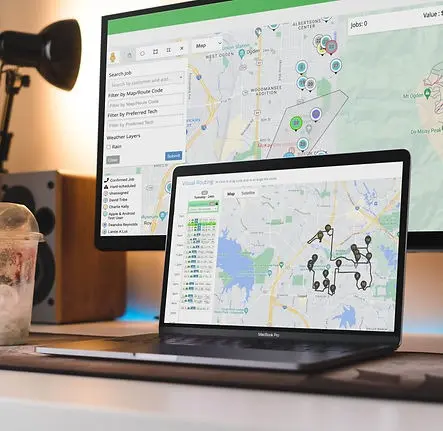
The digital trip planner has revolutionized how we organize travel. From cross-country road trips to complex multi-modal commutes, these tools provide seamless, personalized itineraries in seconds. While the user experience appears deceptively simple—you input a start point and an endpoint—the underlying technological process involves sophisticated data management, powerful algorithms, and real-time computation.
This article dissects the core stages of modern trip planning, explaining exactly how these powerful tools transform complex geospatial data into an actionable route.
Stage One: Data Aggregation and Intake
A trip planner begins its work by compiling and ingesting vast quantities of reliable data. No single source provides all necessary information; therefore, the planner utilizes a robust system of APIs (Application Programming Interfaces) and partnerships.
The system collects three primary categories of data:
- Geospatial Mapping Data: This forms the structural backbone. Planners map the global road network, rail links, airways, and pedestrian pathways, assigning metrics like speed limits and distance to every segment.
- Public Transit Schedules: For transit planning, the system integrates static timetables, route maps, and operational hours provided by global transportation agencies.
- Points of Interest (POIs): Planners incorporate databases detailing hotels, restaurants, landmarks, and gas stations, enabling users to customize stops along their journey.
When a user submits a request, the system instantly processes the desired origin, destination, and any specified travel constraints (e.g., avoiding tolls, prioritizing public transport, or optimizing for low fuel consumption).
Stage Two: The Optimization Algorithm
The operational core of the trip planner is the route optimization algorithm. This software solves what is known in computer science as the “shortest path problem” or, more accurately, the “most efficient path problem.”
The algorithm does not simply measure distance; it calculates millions of potential routes, weighing all associated constraints simultaneously. Advanced trip planners rely on variants of highly efficient graph search techniques, which evaluate the cost (time, money, or distance) of moving from one designated “node” (intersection or station) to the next.
The planner applies user-defined constraints during this calculation phase. For example, if a traveler requests a route that avoids expressways, the algorithm assigns an extremely high cost to all expressway segments, effectively preventing their inclusion in the final recommendation. This iterative process allows the system to identify the single best route that satisfies all parameters within milliseconds.
Stage Three: Real-Time Dynamic Planning
What differentiates basic mapping software from a sophisticated trip planner is the ability to handle dynamic real-world conditions. Algorithms must account for unforeseen events like traffic jams, transit delays, or temporary road closures.
Planners actively receive real-time data feeds from various sources, including GPS probes, public transit trackers, and sensor networks. When the system detects a significant deviation from expected travel times along a planned route (e.g., a traffic accident), it re-runs the optimization model instantaneously.
This dynamic processing capability allows the planner to generate immediate notifications and alternative routing suggestions. The system continuously monitors the route until the traveler reaches the final destination, ensuring the itinerary remains accurate and efficient despite unpredictable external factors.
Finally
The modern trip planner operates as a powerful computational engine, seamlessly blending static map data with dynamic, real-time feedback. This sophisticated process, driven by advanced optimization algorithms, provides travelers with efficient, personalized, and constantly updated journeys, establishing these tools as indispensable components of contemporary travel.


