


Introduction
Transportation systems form the essential infrastructure of modern economies, connecting people, products, and markets across the globe. As these networks grow in complexity, the need for efficiency, safety, and scalability becomes paramount. Artificial Intelligence and Machine Learning (ML) have emerged not merely as supplementary tools but as the foundational technology driving the next generation of global mobility.
AI in transportation is a rapidly evolving field encompassing everything from detailed traffic management algorithms to complex autonomous vehicle navigation systems. This comprehensive analysis defines the mechanisms through which systems actively transform traditional transportation sectors. We examine the core applications, highlight the profound benefits, and explore the necessary steps involved in deploying these transformative technologies effectively.
I. The Core Pillars: Safety and Efficiency
These systems dramatically improve safety across global transit networks while simultaneously optimizing operational throughput. By processing vast datasets in real-time—a task impossible for human operators — it identifies patterns, mitigates risk, and responds dynamically to fluctuating operational environments.
Enhancing Road Safety through Computer Vision
Direct safety impacts occurs through computer vision and deep learning models deployed in vehicles and along roadways. These sophisticated systems do not merely record events; they actively interpret them to prevent accidents.
Algorithms analyze live camera feeds and sensor data, identifying dangerous behaviors such as distracted driving, extreme fatigue, or unauthorized lane changes. In commercial trucking, systems monitor driver alertness, providing immediate auditory or haptic warnings when they detect signs of impairment or inattention. Furthermore, roadside infrastructure uses computer vision to detect subtle changes in pavement integrity or sudden obstacles. This proactive approach significantly reduces the human error factor, which historically causes the majority of transport accidents.
Optimizing Traffic Flow and Congestion Management
Urban environments face persistent challenges related to traffic congestion, which wastes time, consumes excessive fuel, and increases emissions. They provide crucial solutions for dynamic traffic management, moving beyond static, timed traffic lights.
Smart transportation systems utilize ML algorithms to analyze real-time data inputs—including vehicle speeds, incident reports, pedestrian volume, and weather conditions. Based on this complex analysis, it dynamically adjusts signal timings across an entire grid instantaneously. If an accident suddenly closes a major artery, the system automatically recalibrates surrounding routes, guiding traffic to alternative paths and preventing secondary bottlenecks. These predictive models anticipate traffic volume peaks before they materialize, allowing infrastructure managers to preemptively deploy resources and reroute vehicles, fundamentally easing congestion and improving daily commuters’ quality of life.
II. Revolutionizing Freight, Logistics, and Supply Chain Visibility
The logistics sector operates on razor-thin margins and requires absolute precision. Smart technologies introduce essential predictive capabilities and comprehensive automation, transforming cumbersome supply chains into lean, adaptable networks.
Predictive Maintenance: Minimizing Downtime
Unscheduled asset downtime—a truck breakdown, a delayed train, or a malfunctioning crane—costs transportation companies billions annually. Predictive maintenance systems leverage the Internet of Things (IoT) and AI to anticipate equipment failures before they occur, fundamentally changing maintenance scheduling.
Sensors embedded within vehicle components (engines, brakes, tires, and rail tracks) continuously collect data on vibration, temperature, and performance metrics. Models then analyze this extensive stream of telemetry data, learning the “normal” operational signature of each component. When the system detects anomalies that signal imminent failure—a bearing vibrating slightly outside tolerance or an engine temperature gradient increasing too rapidly—it immediately triggers a high-priority alert. Operators schedule necessary maintenance proactively during planned downtime, avoiding costly, disruptive, and potentially dangerous equipment failures mid-route. This proactive strategy ensures maximum asset utilization and significantly extends the lifespan of expensive transportation infrastructure.
Route Optimization and Inventory Visibility
For large-scale freight operations, choosing the optimal route involves integrating dozens of dynamic variables: fuel costs, road tolls, driver availability, delivery windows, and real-time traffic conditions. Smart route optimization platforms calculate the most cost-effective and time-efficient paths, often generating results human planners overlook.
Furthermore, it manages complex inventory systems in warehouses and distribution centers. ML algorithms forecast demand with high accuracy, optimizing where companies store items and when they schedule replenishment shipments. This deep visibility reduces the risk of stockouts and minimizes the holding costs associated with excess inventory, creating a more responsive and resilient global supply chain. This approach allows logistics providers to adapt instantly to geopolitical shifts or sudden market demands, maintaining operational continuity even under pressure.
III. The Rise of Autonomous Mobility
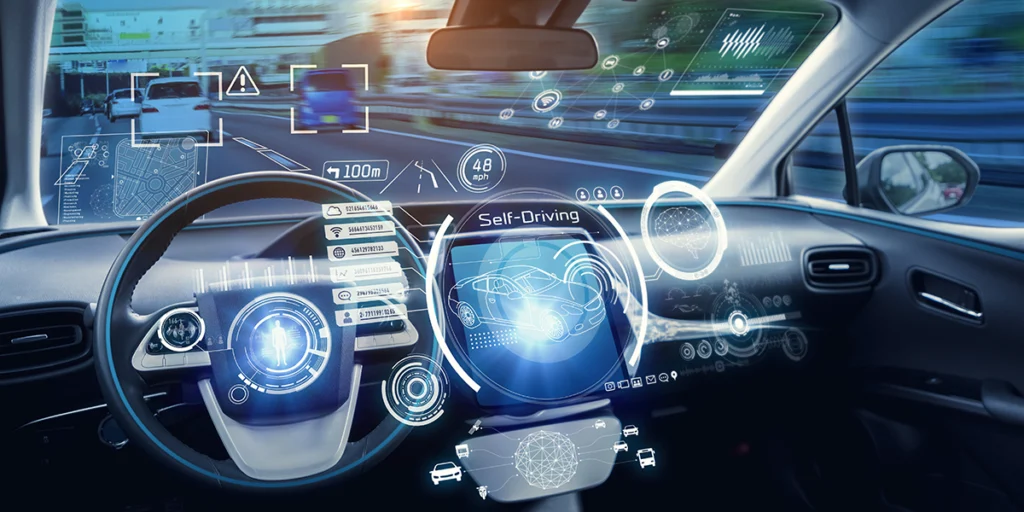
Autonomous Vehicles (AVs) represent the culmination of many smart applications in transportation. While self-driving passenger cars generate the most public interest, novel computer applications drive significant autonomous advances across maritime, rail, and air freight sectors as well.
Autonomous Vehicles (AVs) and the General Public
AVs rely heavily on Sensory Fusion—the process of combining data from various input devices (LiDAR, radar, ultrasonic sensors, and cameras) to create a comprehensive, 3D map of the environment. Sophisticated algorithms interpret this vast stream of data, classifying objects (pedestrians, cyclists, other vehicles, debris) and predicting their future trajectory.
High-level control systems then execute navigation commands, making split-second decisions regarding acceleration, braking, and steering. The system handles every aspect of the driving task, significantly reducing driver fatigue on long-haul routes. This feature promises a future where accidents resulting from human error become exceptionally rare. Major manufacturers actively test Level 4 and Level 5 automation, focusing initially on tightly controlled environments like dedicated freight lanes or fixed-route passenger shuttles.
Challenges and Regulatory Hurdles
While the technology rapidly matures, deploying fully autonomous systems requires careful navigation of regulatory landscapes and public acceptance. Companies must ensure their decision-making processes remain transparent, ethical, and demonstrably safer than human operation. Governments globally develop new liability frameworks and communication protocols (V2X technology—Vehicle to Everything) necessary to support fleets of driverless vehicles interacting seamlessly with traditional infrastructure and human-operated cars. Successful integration demands robust cybersecurity measures to protect these highly connected systems from malicious interference.
IV. Sustainability and the Future of Urban Mobility
Intelligent applications play a critical role in the transition toward sustainable transportation systems, helping cities reduce their carbon footprint and promote equitable access to mobility options.
Reducing Environmental Impact
These rules directly enhance resource efficiency by optimizing fuel consumption and promoting green routing. In large vehicle fleets, software analyzes driving habits and road conditions, providing drivers with real-time coaching to encourage smoother acceleration and braking, saving fuel immediately.
Furthermore, they guides the deployment and charging strategies for electric vehicle (EV) fleets. By predicting energy demand surges and identifying optimal charging times based on grid load and electricity cost, itensures that fleets operate efficiently, maximizing the use of renewable energy sources and minimizing strain on the power grid.
Integrating Multi-Modal Transport
Modern cities require seamless integration across various transport modes: buses, subways, ride-sharing, and micro-mobility options (scooters, bikes). Advanced computers servesas the central orchestration system, managing the flow between these disparate systems.
Smart mobility platforms use these automated systems to analyze commuter demand patterns dynamically. If subway traffic peaks unexpectedly, the system might automatically dispatch additional public buses to relief congested stations. This holistic, data-driven approach moves people more efficiently with fewer vehicles, thereby reducing urban congestion and supporting sustainable urban planning goals.
Conclusion
Artificial Intelligence is not merely changing transportation; it fundamentally redefines how global systems operate, prioritizing safety, efficiency, and sustainability. From high-level supply chain optimization to the micro-level decisions of autonomous vehicles, they provide the intelligence necessary to manage increasingly complex networks.
Companies that embrace AI technologies achieve significant competitive advantages through reduced operational costs, enhanced asset management, and superior safety records. Governments and urban planners must actively invest in the digital infrastructure required to support these smart technologies. The transportation sector stands at the threshold of a revolution where data drives mobility.


