


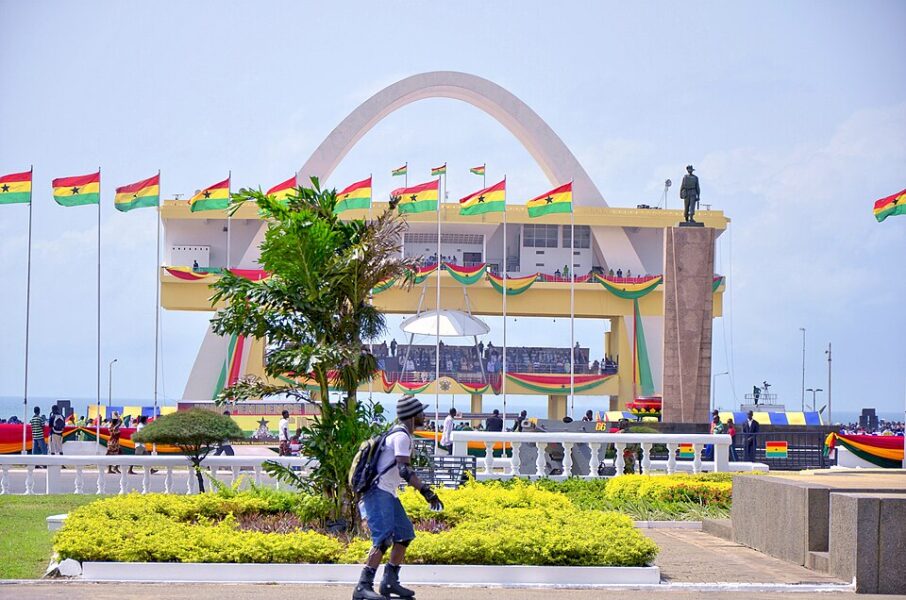
Accra serves as the vibrant capital of Ghana, and it belongs to the Greater Accra Region. This region occupies the southeastern corner of the country,. It borders the Gulf of Guinea to the south and the Eastern Region to the north and west. The Greater Accra Region forms the smallest yet most densely populated administrative area in Ghana. It drives much of the nation’s economic, cultural, and political activity.
Geographic Setting
The Greater Accra Region stretches along a narrow coastal strip that measures roughly 1,400 square kilometres. The Atlantic Ocean defines its southern edge, giving the city its historic port character. Inland, the region meets the undulating hills of the Akwapim‑Togo Range, which mark the transition to the interior savannah. This juxtaposition of sea, flatlands, and modest highlands creates a diverse environment that supports commerce, tourism, and agriculture.
Administrative Structure
Ghana divides its territory into sixteen regions, each overseen by a Regional Minister appointed by the President. The Greater Accra Region houses the national capital. Therefore, the Regional Minister coordinates closely with the Office of the President and the Ministry of Local Government. Within the region, eleven municipal and district assemblies manage local affairs, ranging from the bustling Accra Metropolitan Assembly to the more suburban Ada West District.
Demographic Profile
The Greater Accra Region hosts over four million residents, accounting for roughly 15 percent of Ghana’s total population. People from every ethnic group across the country converge here, making the region a true melting pot. The youthful demographic fuels a dynamic labor market, while the high concentration of universities, hospitals, and cultural institutions attracts both domestic and international migrants.
Economic Significance
Accra anchors Ghana’s economy, and the Greater Accra Region contributes the largest share of the nation’s Gross Domestic Product. The region’s ports handle the majority of Ghana’s imports and exports, linking the country to global supply chains. Financial services, telecommunications, and creative industries thrive in the capital’s central business district, while the coastal suburbs support tourism, fishing, and artisanal crafts. Investors worldwide recognize the region’s strategic position as a gateway to West Africa.
Cultural and Historical Highlights
The Greater Accra Region preserves Ghana’s rich heritage while embracing modernity. Historical sites such as the Jamestown Lighthouse, the Kwame Nkrumah Mausoleum, and the Makola Market illustrate the region’s evolution from a colonial trading post to an independent nation’s heart. Annual festivals—Homowo, Kpalongo, and the Chale Wote Street Art Festival—celebrate diverse traditions and attract visitors from across the continent.
Connectivity and Infrastructure
Accra benefits from an extensive transport network that reinforces its regional importance. Kotoka International Airport connects the city to Europe, the Americas, and Asia, while the Accra–Tema motorway links the capital to the major industrial hub of Tema. Ongoing road upgrades, rail projects, and digital infrastructure investments enhance mobility for residents and businesses alike.
Why the Region Matters
Understanding that Accra belongs to the Greater Accra Region helps clarify the city’s role within Ghana’s national framework. The region’s compact size, high density, and strategic coastal location give it outsized influence over policy decisions, economic trends, and cultural developments. Whether you are a traveler, investor, student, or policymaker, recognizing the region’s characteristics equips you to engage more effectively with Ghana’s capital and its surrounding communities.
Summary
Accra lies in the Greater Accra Region, a compact, coastal area that serves as Ghana’s political hub, economic engine, and cultural showcase. The region’s unique blend of geography, demographics, and infrastructure makes it central to the country’s present achievements and future aspirations.


