


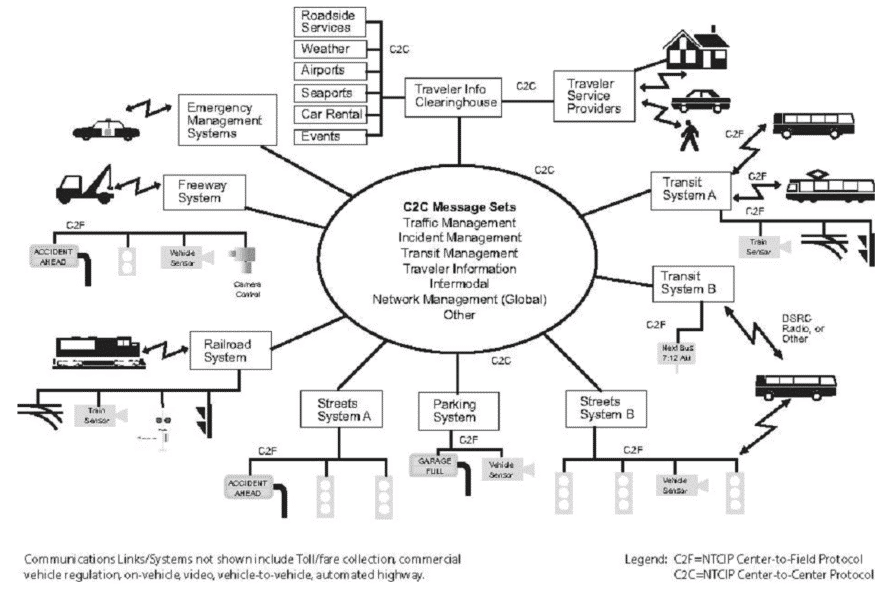
What is the NTCIP Protocol?
NTCIP stands for National Transportation Communications for ITS Protocol. It represents a family of open communication standards that enable the interchange of traffic control and Intelligent Transportation Systems (ITS) data. Developed as a joint venture by the National Electrical Manufacturers Association (NEMA), the American Association of State Highway and Transportation Officials (AASHTO), and the Institute of Transportation Engineers (ITE), NTCIP standardizes how roadside equipment—such as traffic signals, dynamic message signs (DMS), and closed-circuit television (CCTV) cameras—communicates with central management software.
Historically, transportation agencies faced vendor lock-in. Proprietary systems prevented cities from combining hardware from different manufacturers. NTCIP revolutionized the industry by establishing a universal “language” for traffic infrastructure.
Modern transportation networks require seamless communication between disparate devices to manage traffic efficiently, reduce congestion, and enhance public safety. At the center of this technological framework lies the NTCIP protocol.
Key Benefits of NTCIP Implementation
Adopting the NTCIP framework delivers measurable operational advantages for departments of transportation (DOTs) and municipal planners:
- Interoperability: Integrates hardware from multiple vendors into a single, cohesive central software platform.
- Cost Efficiency: Eliminates the necessity to replace entire legacy systems when upgrading specific intersections or corridors.
- Scalability: Facilitates the expansion of regional ITS networks without communication bottlenecks.
- Future-Proofing: Accommodates emerging transportation technologies, including connected and automated vehicles (CAVs).
Industry Statistics and Research Insights
Research underscores the vital role open protocols play in modern infrastructure management. According to a landmark study published in the Transportation Research Record (Journal of the Transportation Research Board), agencies utilizing standardized ITS protocols report a 35% reduction in system integration costs and a significant decrease in maintenance downtime.
Furthermore, data from a comprehensive infrastructure survey conducted by the Federal Highway Administration (FHWA) revealed that over 82% of state and local transportation agencies mandate NTCIP compliance for all new traffic signal controller procurements.
Recent Industry Developments and Forecasts
| Metric / Indicator | Historical Data (2020) | Current Status (2024) | Forecast (2030) |
|---|---|---|---|
| Global ITS Market Size | $45 Billion USD | $68 Billion USD | $115 Billion USD |
| NTCIP-Compliant Deployment Rate | 65% of US Municipalities | 84% of US Municipalities | 95%+ projected |
| Primary Integration Focus | Legacy Traffic Signals | Advanced Traffic Management Systems (ATMS) | V2X (Vehicle-to-Everything) Ecosystems |
Industry forecasts indicate that the global Intelligent Transportation Systems market will experience a compound annual growth rate (CAGR) exceeding 9% through the end of the decade. As cities transition toward smart city frameworks, the IEEE Intelligent Transportation Systems Society notes that NTCIP standards are evolving to support low-latency edge computing and real-time cloud data pipelines.
Technical Architecture and Standards
NTCIP operates on the Open Systems Interconnection (OSI) model, adapting network protocols to meet the rigorous demands of the transportation sector. Key standards within the family include:
- NTCIP 1201: Global Object Definitions (common configuration data).
- NTCIP 1202: Object Definitions for Actuated Traffic Signal Controller (ASC) Units.
- NTCIP 1203: Object Definitions for Dynamic Message Signs (DMS).
- NTCIP 2103: Subnetwork Profile over Simple Network Management Protocol (SNMP).
Academic institutions, including the Texas A&M Transportation Institute (TTI), continuously publish peer-reviewed evaluations regarding the protocol’s cybersecurity resilience and message optimization efficiency, ensuring the standard meets contemporary threat landscapes.
Next Steps
The NTCIP protocol serves as the foundational backbone of modern traffic management. By breaking down proprietary barriers, NTCIP empowers civil engineers and city planners to build adaptable, cost-effective, and safe transportation networks.
To explore specific standard documents, implementation guidelines, and compliance testing procedures, consult the official resources provided by the USDOT Intelligent Transportation Systems Joint Program Office and the AASHTO Committee on Transportation System Operations.


