


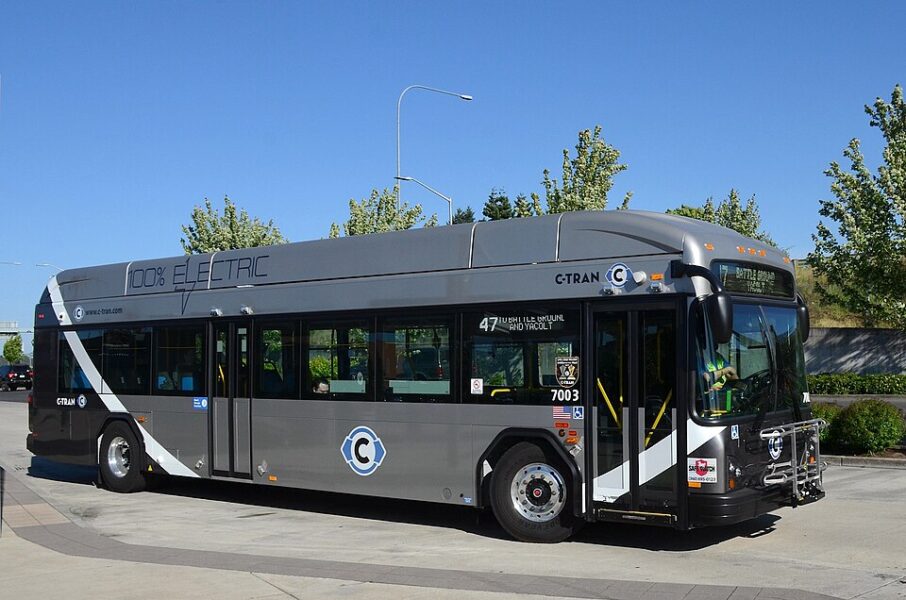
The capital of Ghana has taken a significant step towards revolutionizing its public transportation system. With the introduction of the Smart Transyt electric bus, the city is set to transform the way citizens travel the city. The new service will provide a cleaner, more efficient, and environmentally friendly alternative to traditional buses.
The service is designed to reduce congestion and pollution in the city. It also aims to provide a comfortable and reliable means of transportation for commuters. The bus is equipped with advanced technology. So it is able to travel long distances without emitting any harmful pollutants into the environment.
One of the key benefits is its potential to reduce greenhouse gas emissions in the city. According to estimates, the bus can reduce carbon emissions by up to 70% compared to traditional diesel-powered buses. This is a significant step towards mitigating the impact of climate change and creating a more sustainable future for the city.
The system is also designed to improve the overall commuting experience for citizens. The bus is equipped with modern amenities, comfortable seating, and onboard Wi-Fi. These features make it an attractive option for commuters who want to stay connected and productive while on the move.
FEATURES OF THE NEW SYSTEM
ROUTE MANAGEMENT
Another critical aspect of route efficiency is adaptability. Systems that incorporate real-time data—such as GPS tracking and traffic updates—can adjust routes on the fly, rerouting vehicles to avoid delays and maintain service level agreements. This responsiveness not only improves customer satisfaction but also enhances operational resilience.
At the core of smart route management lies a multilayered data architecture. Sensors embedded in roadways, connected vehicles, and weather stations continuously feed information on traffic density, incident reports, air quality, and road surface conditions. This raw material is processed by edge‑computing nodes. These algos perform preliminary filtering before transmitting aggregated insights to centralized cloud platforms. Within these platforms, machine‑learning models analyse historical patterns alongside live inputs to estimate travel times, and identify alternative corridors.
MOBILE MONEY PAYMENT
The integration of mobile money into public transportation in Ghana has reshaped commuter experiences. Their adoption for paying bus fares epitomizes the convergence of technology and accessibility. This shift not only streamlines travel but also addresses longstanding challenges in Ghana’s transport ecosystem.
For commuters, mobile money payments eliminate the need to carry cash, reducing the risk of theft, loss, or long queues at bus stops. A single tap on a mobile device suffices, enabling seamless boarding and minimizing delays. This is particularly beneficial in high-traffic urban centers like Accra and Kumasi, where time-saving solutions are critical. Additionally, mobile money systems often integrate with digital apps that provide real-time updates on bus locations, schedules, and fare prices. Such features empower passengers to plan their journeys more effectively, reducing uncertainty and enhancing overall satisfaction.
SUMMARY OF PASSENGER CONVENIENCES
- Offers Charging Ports
- Smart trip planning
- Cashless Payment System
- Notification of location of nearby buses
- Free Wi-Fi
- Short code registration
FNALLY
Overall, the Smart Transyt electric bus is a significant innovation in the field of public transportation, and its introduction in Accra is a major step towards creating a more sustainable and efficient transportation system. As the city continues to grow and develop, it is likely that it will play an increasingly important role in shaping the future of transportation in Accra. With its advanced technology, environmental benefits, and potential to stimulate economic growth, the new bus is worth watching in the years to come.


