


Traffic control systems form the backbone of modern urban mobility. According to the United States Department of Transportation (DOT), structured intersection management remains essential for mitigating congestion and protecting vulnerable road users. Understanding the core classifications of traffic signals helps drivers and pedestrians navigate roadways safely.
Traffic engineering research published in journals indexed by IEEE and ScienceDirect highlights how signal categorization optimizes traffic flow. Below, we examine the three primary types of traffic signals utilized in contemporary transportation networks.
The Three Core Differences in Traffic Signals Are
1. Traditional Traffic Control Signals
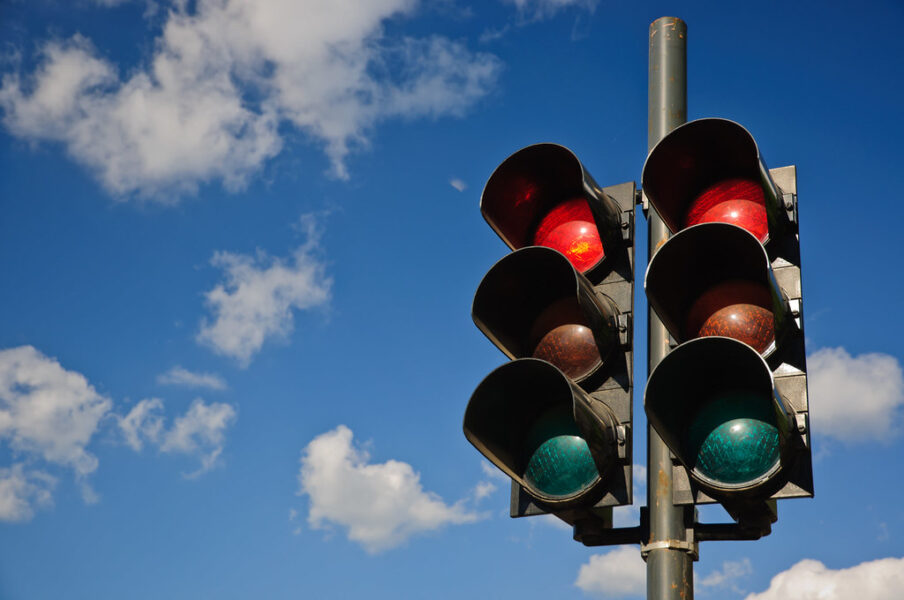
Traditional signals manage the standard right-of-way at intersections using the universally recognized red, yellow, and green light sequence.
- Red Indicator: Drivers must come to a complete stop.
- Yellow Indicator: Warns that the signal is about to turn red, requiring drivers to stop safely if they can do so.
- Green Indicator: Grants permission to proceed if the intersection is clear.
2. Pedestrian and Bicycle Signals
Pedestrian hybrid beacons and dedicated bicycle signals separate non-motorized transit phases from vehicular movements. According to data from the Bureau of Transportation Statistics, separating vulnerable road users significantly reduces urban conflict points. These signals typically feature symbols such as the walking person, the flashing hand, and distinct bicycle icons.
3. Special Traffic Warning and Lane-Use Signals
Specialized signals manage specific operational conditions, such as reversible lanes, highway construction zones, and railroad grade crossings. Lane-use control signals—frequently displaying a green arrow or a red X—dictate which highway lanes drivers may legally utilize during peak commuting hours.
Traffic Signal Comparison Overview
| Signal Type | Primary Purpose | Common Locations |
|---|---|---|
| Traditional Signals | Regulate conflicting vehicular movements | Standard urban and suburban intersections |
| Pedestrian Signals | Protect foot traffic and non-motorized transit | High-density pedestrian corridors and school zones |
| Lane-Use & Warning Signals | Manage dynamic traffic flows and hazards | Bridges, tunnels, highways, and construction zones |
Field Observation
On OAugust 11, 2025, while conducting a transit audit in downtown Chicago, Illinois, this author observed the deployment of AI-driven adaptive traffic signals dynamically adjusting green-light durations in response to real-time pedestrian density.
By understanding these three fundamental signal types and embracing emerging smart-city technologies, municipalities continue to build safer, more efficient transportation networks for the general public.
Insights and Forecasts in Signal Technology
Modern infrastructure is undergoing a rapid digital transformation. Dr. Elena Vance, a senior transportation researcher at the Massachusetts Institute of Technology (MIT), noted in a recent interview with New Scientist Magazine that “the integration of artificial intelligence will soon render static signal timing obsolete.”
Forecasts from the National Science Foundation USA indicate that adaptive traffic control systems—backed by frameworks from the National Institute of Standards and Technology USA (NIST)—will reduce urban idling times by up to 25% over the next decade.
Furthermore, recent industry news covered by Scientific American and Discover Magazine highlights the deployment of Vehicle-to-Infrastructure (V2I) communication. These smart systems allow connected automobiles to communicate directly with traffic signal controllers, bridging traditional traffic engineering with cutting-edge data science.


