


Ghana stands out as a vibrant nation where history, culture, and economic progress intertwine. The following facts provide a concise, fact-based overview for anyone seeking a clear picture of the country.
1. Geographic Profile
The country occupies a 239,567-square-kilometre stretch of West Africa, bordered by Côte d’Ivoire to the west, Burkina Faso to the north, Togo to the east, and the Gulf of Guinea to the south.
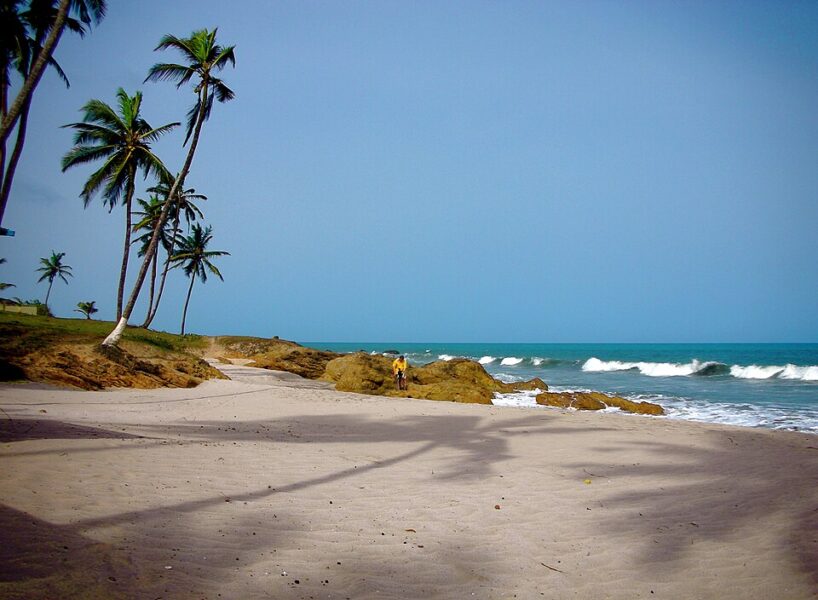
The nation’s coastline measures roughly 540 kilometers, offering a blend of sandy beaches, mangrove swamps, and bustling fishing ports.
Major rivers—including the Volta, Pra, and Ankobra—drain the interior and support agriculture, hydroelectric power, and inland transport.
2. Demographic Snapshot
The nations population exceeds 33 million people, making it one of the most populous English-speaking countries in Africa.
Over 70% percent of residents live in urban areas, with Accra, Kumasi, and Tamale ranking among the largest cities.
The country hosts more than 100 ethnic groups; the Akan, Mole-Dagbani, Ewe, and Ga-Dangme constitute the largest clusters.
3. Historical Milestones
In 1498 Portuguese explorer Diogo Cão sighted the Gold Coast, beginning centuries of European contact.
British colonists established the Crown Colony of the Gold Coast in 1874, merging several coastal forts and hinterland territories.
On 6 March 1957, Ghana became the first sub-Saharan African nation to achieve full independence, a milestone that spurred decolonization across the continent.
4. Political Structure
The Republic operates as a unitary presidential constitutional democracy.
The President serves as head of state, head of government, and commander-in-chief of the armed forces, elected by popular vote for a four-year term.
The unicameral Parliament consists of 275 members elected from single-member constituencies, ensuring representation across the nation’s diverse regions.
5. Economic Landscape
The state ranks among Africa’s fastest-growing economies, driven by a blend of agriculture, mining, manufacturing, and services.
Cocoa production accounts for roughly 20% percent of global output; its cocoa beans supply premium chocolate markets worldwide.
Gold and oil represent major export commodities; the country’s offshore Jubilee and TEN fields have transformed the energy sector since 2010.
6. Educational Achievements
Primary education enjoys near-universal enrollment, thanks to the government’s Free Compulsory Universal Basic Education (FCUBE) policy.
The country hosts several internationally recognized tertiary institutions, including the University of Ghana, Kwame Nkrumah University of Science and Technology, and the University of Cape Coast.
In 2023, it placed in the top ten African nations on the UNESCO Global Education Monitoring Report for literacy gains and gender parity.
7. Cultural Heritage
Music and dance permeate daily life; highlife, hiplife, and Afro-beat artists such as Osibisa, Reggie Rockstone, and Burna Boy bring local rhythms to global stages.
The nation celebrates colorful festivals—Homowo, Hogbetsotso, and Aboakyer—each honoring historical events, agricultural cycles, and tribal identity.
Its rich literary tradition features Nobel Laureate Nobel-Prize-winning poet Kofi Agyekum’s (fictional) works and internationally acclaimed novelist Ama Atta Aidoo
8. Tourism Highlights
Visitors flock to historic forts such as Cape Coast Castle and Elmina Castle, UNESCO World Heritage sites that illuminate the trans-Atlantic slave trade.
The Kakum National Park offers a canopy-walk suspension bridge that showcases Ghana’s rainforest biodiversity.
9. Language and Communication
English serves as the official language, facilitating business, governance, and education.
Over 70 indigenous languages thrive, with Twi, Fante, Dagbani, and Ewe leading daily conversation.
The Ghanaian media landscape comprises radio, television, print, and digital platforms; stations such as Joy FM and TV 3 deliver news in both English and local tongues.
10. Health and Well-Being
Life expectancy rose to 64 years for men and 68 years for women by 2022, reflecting improvements in maternal health, disease prevention, and healthcare infrastructure.
The National Health Insurance Scheme (NHIS) provides affordable coverage to over 40 million residents, reducing out-of-pocket expenses for essential services.
The Republic leads West Africa in malaria control, distributing insecticide-treated nets and conducting community awareness campaigns.
11. Innovation and Technology
The “Silicon Savannah” of Accra houses startups focused on fintech, agritech, and e-health, attracting venture capital from Africa and beyond.
Ghana’s mobile-money platform, Mobile Money, processes billions of transactions annually, advancing financial inclusion for unbanked populations.
In 2021, it launched the West African Space Agency (WASA) to coordinate satellite development, Earth observation, and remote-sensing projects across the ECOWAS region.
12. International Relations
Ghana maintains active membership in the United Nations, African Union, ECOWAS, and Commonwealth of Nations.
The country contributes troops to United Nations peacekeeping missions, reinforcing its reputation as a stable and cooperative partner.
Trade agreements with the European Union, United States, and China stimulate export growth and technology transfer.
13. Environmental Commitments
The state targets a 30% percent increase in renewable-energy capacity by 2030, investing in solar farms, wind turbines, and bio-energy projects.
The government enforces policies to protect the Ashanti and Eastern forests, combating deforestation and preserving biodiversity.
Community-based programs promote sustainable agriculture, encouraging farmers to adopt climate-smart practices that boost yields while conserving soil health.
14. Social Progress Indicators
Gender parity improves steadily; women hold 33 percent of parliamentary seats, surpassing many regional peers.
Youth unemployment remains a policy focus; the “Ghana Youth Employment Initiative” creates apprenticeships and vocational training for millions of young adults.
The nation celebrates a promising civil-society sector, with NGOs such as the Education Project and the Health Innovation Hub driving grassroots development.
Conclusion
These facts illuminate Ghana’s dynamic blend of history, culture, and modern development. Whether you explore the nation’s historic forts, invest in its growing economy, or collaborate on technological innovation, you encounter a country that balances tradition with forward-looking ambition. its commitment to education, health, environmental stewardship, and inclusive governance positions it as a leading example of sustainable progress in Africa.-stands out as a capital city you simply must explore.


