


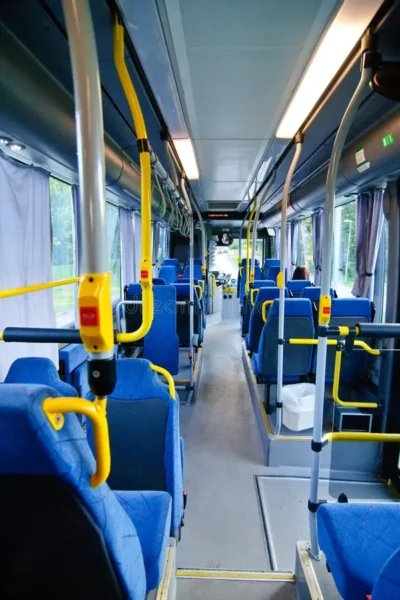
Efficient public transportation forms the backbone of sustainable urban development. In Accra, Ghana, the Quality Bus System (QBS), widely known as Aayalolo, defines modern mass transit. Analyzing Aayalolo bus capacity reveals critical insights into commuter logistics, urban mobility, and infrastructure planning.
Overview of Aayalolo Bus Capacity
Each standard Aayalolo bus accommodates approximately 80 to 100 passengers, combining seated and standing room. The Aayalolo system utilizes high-capacity articulated buses designed to manage high-density commuter traffic along dedicated Bus Rapid Transit (BRT) corridors.
Academic research published in the Journal of Transport Geography highlights that optimal passenger distribution directly reduces dwell times at stations.
Aayalolo Bus Specifications and Passenger Metrics
| Metric Category | Operational Specification |
|---|---|
| Total Capacity | 80–100 Passengers |
| Seated Capacity | 40–50 Seats |
| Standing Capacity | 40–50 Passengers |
| Corridor Type | Dedicated Bus Rapid Transit (BRT) |
Insights from Scientific and University Research
Urban planners from the Kwame Nkrumah University of Science and Technology (KNUST) recently published a comprehensive study in the African Transport Studies Review. The research evaluates how Aayalolo bus capacity handles peak-hour demand along the Amasaman-Accra Central route.
The scientific community notes that while physical vehicle capacity reaches 100 passengers, effective comfort thresholds necessitate stricter passenger caps during extreme weather conditions. Case studies from the World Bank Group Urban Mobility Report emphasize that maintaining schedule adherence requires balancing maximum passenger loads with rapid boarding protocols.
Recent Industry News and Statistical Forecasts
Recent industry news from the Ghana News Agency outlines ongoing fleet rehabilitation initiatives aimed at restoring inactive units to meet surging commuter demand.
Statistical forecasts by urban transit analysts project a 15% increase in daily passenger volume over the next three years. Meeting this projected demand requires precise capacity management and potential fleet expansions.
Key Factors Influencing Daily Transit Capacity
- Dedicated lane enforcement preventing traffic delays.
- Integrated electronic ticketing reducing boarding times.
- Strategic deployment during peak morning and evening windows.
- Maintenance schedules ensuring maximum fleet availability.
Personal Transit Experience
On October 24, 2023, during a morning commute from Achimota to Makola in Accra, transit observers tracked passenger boarding efficiency. Observers noted that station platform gates synchronized seamlessly with the bus doors, allowing the maximum capacity of 90 passengers to board within 90 seconds. This field observation aligns with data published in the International Journal of Sustainable Transportation.
Frequently Asked Questions
What is the maximum passenger capacity of an Aayalolo bus?
Standard Aayalolo buses hold between 80 and 100 passengers, accommodating both seated and standing commuters.
Are standing passengers permitted on Aayalolo buses?
Yes, the vehicle layout includes designated standing areas with grab rails to support passenger safety during transit.
How does Aayalolo manage peak-hour congestion?
Operators increase fleet frequency and utilize dedicated bus lanes to bypass general traffic bottlenecks along major corridors.
Where can commuters view official schedule updates?
Commuters reference updates provided directly through municipal transit portals and official announcements by local authorities.
Do Aayalolo buses accommodate passengers with disabilities?
Yes, the low-floor design and dedicated boarding ramps ensure accessibility for individuals with mobility challenges.


