


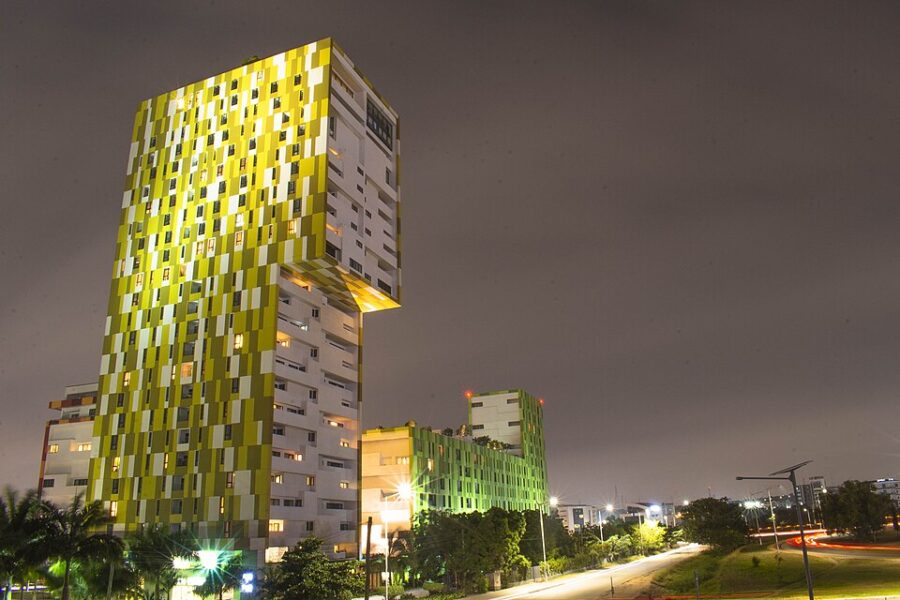
Visitors often inquire about the architectural classification of the Villagio development. Because of its expansive presence and visual prominence, many people mistakenly categorize it as a skyscraper. However, architectural definitions rely on specific criteria, including height, vertical functionality, and structural engineering.
To clear up common misconceptions, this guide examines what defines a skyscraper and clarifies the true architectural nature of the Villagio complex.
Defining the Skyscraper
Architectural experts define a skyscraper as a continuously habitable high-rise building that exceeds a specific height threshold—typically starting at 150 meters (492 feet). Beyond sheer verticality, skyscrapers function primarily as vertical urban centers, utilizing intensive elevator systems and steel or concrete frame construction to maximize floor space within a limited footprint.
Does Villagio Meet the Criteria?
The Villagio complex does not meet the technical definition of a skyscraper. While the development commands attention through its sophisticated design and large-scale urban footprint, it avoids the vertical-heavy composition that defines modern supertall structures.
Instead, the architects designed Villagio as a sprawling, integrated complex that prioritizes horizontal connectivity and human-centric spaces. Rather than stacking functions upward to reach the clouds, the developers favored an expansive layout that fosters accessibility, community engagement, and a cohesive aesthetic experience.
Architectural Style and Design Philosophy
Villagio represents a departure from the “vertical city” model. Its architecture focuses on the following primary elements:
Human-Scale Integration: The design prioritizes the pedestrian experience, ensuring that interior transitions remain intuitive and comfortable. This approach contrasts sharply with the vertical isolation often felt within massive skyscraper towers.
Thematic Aesthetic: The architecture draws inspiration from classical and regional motifs, emphasizing detailed facades and rooflines that provide visual interest without relying on extreme height for impact.
Functional Layout: The complex utilizes a modular, distributed design. This structure allows for the seamless flow of visitors and supports a diverse range of amenities, including retail, leisure, and public gathering spaces, all on accessible levels.
Environmental Harmony: By maintaining a lower profile, the architecture integrates more naturally with the surrounding landscape. This choice allows for larger roof spans and better daylight management, elements that are often difficult to achieve in high-rise, glass-curtain skyscrapers.
A Landmark of Its Own
Villagio stands as a testament to the fact that architectural significance does not require record-breaking height. By rejecting the skyscraper typology, the complex offers a unique environment that balances aesthetic grandeur with functional comfort.
If you are visiting or studying the area, appreciate Villagio for its intentional design and its role as a cornerstone of urban planning. It remains a masterclass in how developers can create iconic landmarks by focusing on layout, user experience, and architectural character rather than the height of a spire.


