


Pedestrian safety remains a critical concern in urban and rural environments globally. While traffic volume and infrastructure design play significant roles, weather conditions introduce a dynamic and often unpredictable layer of hazards. Understanding how different weather phenomena affect pedestrian safety empowers individuals to make informed decisions, mitigate risks, and ensure safer journeys.
Reduced Visibility: A Primary Concern
Adverse weather dramatically compromises visibility for both pedestrians and drivers, escalating accident risks.
- Fog and Heavy Rain: These conditions significantly obscure sightlines, making it difficult for drivers to spot pedestrians and for pedestrians to accurately judge vehicle speeds and distances. Reduced visibility directly shortens reaction times, increasing the likelihood of collisions.
- Nighttime Conditions: When combined with rain, fog, or snow, low light conditions become even more perilous. Pedestrians, especially those wearing dark clothing, disappear into their surroundings, becoming almost invisible to motorists.
Always wear bright or light-colored clothing. Use reflective materials on outer garments, backpacks, and footwear. Carry a flashlight or wear blinking lights, particularly during dawn, dusk, or nighttime conditions.
Hazardous Walking Surfaces
Weather frequently transforms pedestrian pathways into dangerous terrains, increasing the risk of slips, trips, and falls.
- Rain and Wet Leaves: Rain makes pavements, crosswalks, and road surfaces extremely slippery. Layers of wet leaves compound this hazard, creating hidden slick spots that offer no traction.
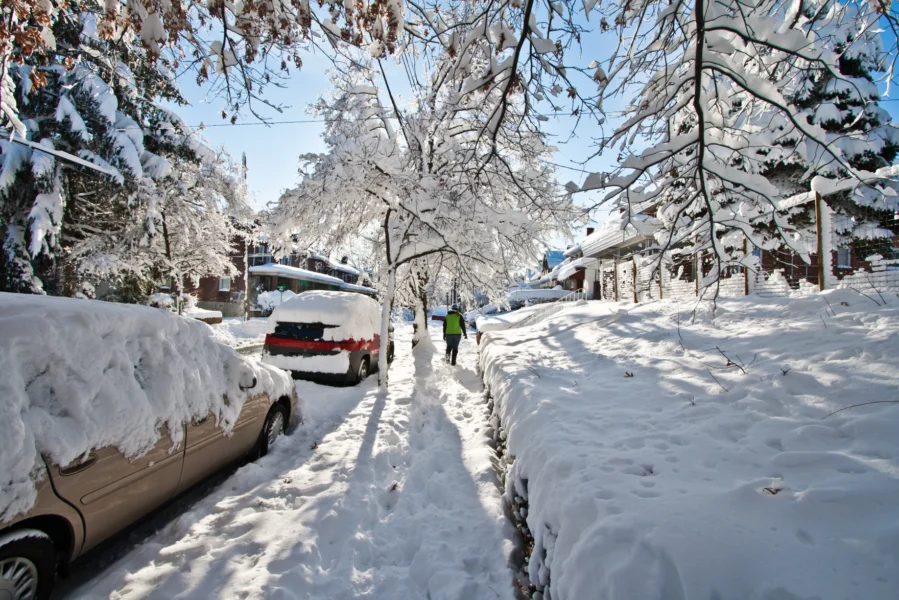
- Snow and Ice: Winter weather presents severe challenges. Snow conceals uneven surfaces, potholes, and debris. Ice, especially “black ice,” forms an invisible, highly slick layer on sidewalks and roads, causing unexpected loss of footing. Pedestrians often suffer serious injuries from falls in these conditions.
Choose appropriate footwear with excellent traction. Take smaller, deliberate steps, shuffle walking on icy patches, and use handrails where available.
Environmental Risks from Severe Weather
Beyond visibility and surface conditions, severe weather introduces direct environmental threats to pedestrians.
- Strong Winds: Gusting winds can cause pedestrians to lose balance, particularly when pushing against the wind, crossing open areas, or near tall buildings. They also blow debris, such as tree branches, signs, and litter, into pathways, creating unexpected obstacles and potential injury sources.
- Thunderstorms: Heavy downpours accompanying thunderstorms quickly lead to flash flooding in low-lying areas, turning streets into impassable rivers. Lightning also poses a significant risk to individuals caught outdoors in exposed locations.
Seek indoor shelter during strong winds or thunderstorms. Avoid walking under trees or near construction sites. Do not attempt to walk through flooded areas; even shallow water can hide dangerous currents or hazards.
Extreme Temperatures and Pedestrian Well-being
Extreme heat and cold conditions directly impact a pedestrian’s physical well-being and judgment.
- Extreme Heat: Prolonged exposure to high temperatures causes dehydration, heat exhaustion, or heatstroke. These conditions impair judgment, reduce alertness, and diminish physical capabilities, making safe travel more difficult.
- xtreme Cold: Frigid temperatures lead to hypothermia, frostbite, and stiffened muscles. These effects reduce agility, make walking more cumbersome, and detract from focus on surroundings.
Dress appropriately for the weather. In hot conditions, wear light, breathable clothing and carry water. In cold conditions, layer clothing to stay warm, cover exposed skin, and wear insulated footwear. Recognize the signs of heat or cold-related illness and seek shelter promptly.
General Pedestrian Safety Practices in All Weather
Regardless of external conditions, always prioritize fundamental safety practices:
- Stay alert and minimize distractions, such as mobile phones.
- Use marked crosswalks and obey traffic signals.
- Plan routes that avoid known hazards, poorly lit areas, or construction zones.
Weather conditions unequivocally impact pedestrian safety. By recognizing these inherent risks and adopting proactive safety measures, pedestrians significantly reduce their vulnerability. Prioritizing awareness and preparedness helps ensure safe journeys for everyone, regardless of the forecast.


