


Overview
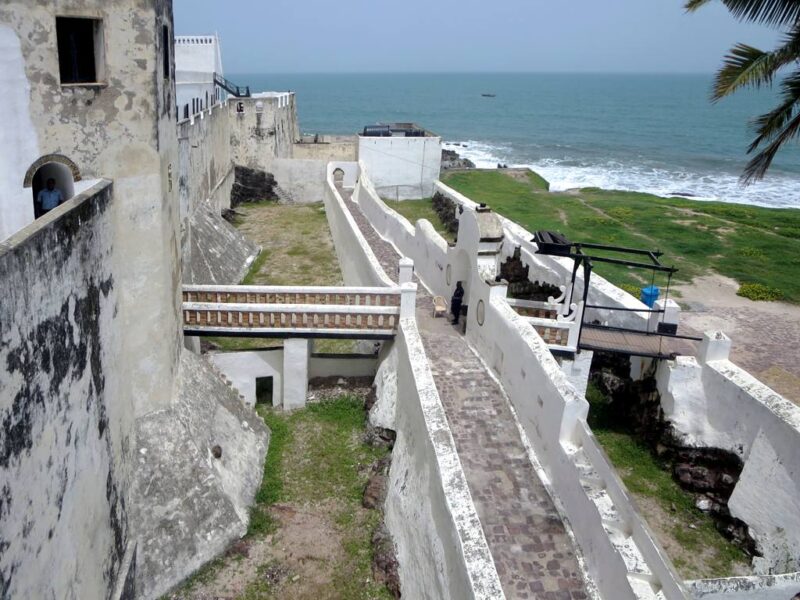
Perched on the rocky promontory of Ghana’s southwestern coast, Fort Elmina greets visitors with a striking silhouette of red-brick walls and towering bastions. The structure marks the first permanent European structure erected on the Gulf of Guinea, and it still commands a central place in discussions of trade, colonialism, and cultural exchange. Scholars, tourists, and local residents alike find in Fort. Elmina a powerful reminder of the region’s complex past and a vibrant venue for contemporary cultural events.
Historical Milestones
1510 – The foundation
Portuguese navigators, led by Diogo de Castro, erected the original wooden version in 1510. Recognizing the strategic value of Elmina’s natural harbor, they replaced the timber enclosure with a stone fortress within a decade. They named the settlement “São São Bartolomeu,” a tribute to their patron saint, and used it as a hub for gold, ivory, and later, the trans-Atlantic slave trade.
1637 – Dutch conquest
In 1637, a fleet of Dutch vessels under Admiral Jan Lodewijk Beyerlinck forced them to surrender. The Dutch expanded the fort’s defensive network, added a chapel, and renamed the settlement “Fort Elmina,” meaning “the mine” in Portuguese, a nod to the lucrative gold trade that financed their operations.
1872 – British administration
When the British annexed the Gold Coast in 1872, they assumed control of the fortified structure. The British introduced new administrative offices, a garrison barracks, and a small museum that displayed artifacts from earlier periods. Although the British never altered the fort’s external silhouette, they modernized its interior to accommodate contemporary military needs.
1999 – UNESCO World Heritage designation
UNESCO recognized it as part of the “Coastal Forts and Castles of Ghana” World Heritage Site. The designation highlighted the fort’s outstanding universal value as a testimony to early European-African contact and the evolution of global trade networks.
Architectural Highlights
Fort Elmina presents a harmonious blend of foreign military architecture. The rectangular layout, reinforced by four angular bastions, creates a defensible enclosure that still shapes the town’s street pattern.
- Main Gate (Porta do Sol) – The imposing wooden doors, flanked by stone pilasters, welcome visitors into the inner courtyard. European masons carved the gate’s lintel with the year 1512, the earliest surviving inscription on the structure.
- The Chapel of St Bartholomew – Dutch craftsmen erected this modest sandstone chapel in 1650. Its vaulted ceiling and simple altar convey the austerity typical of Dutch Calvinist worship.
- The Governor’s House – foreign engineers designed this two-storey building to serve as the administrative heart of the fort. Its large, mullioned windows and terracotta roof tiles reflect Renaissance influences uncommon in West Africa.
- The Prison Block – Built by the British in the late-19th century, this stone cell block houses a small exhibition on the fort’s role in the slave trade. The stark, narrow chambers evoke the suffering endured by countless captives.
All walls rest upon a solid foundation of laterite rock, a material abundant in the surrounding landscape. The fort’s thick masonry, up to two meters in places, still protects the interior from the Atlantic’s salty breezes.
Cultural and Historical Significance
Fort Elmina occupies a crucial spot in the narrative of global exchange. The fort’s initial purpose—to secure gold from the Ashanti hinterland—spurred the emergence of a commercial corridor that linked European markets with sub-Saharan Africa. As the Dutch and later the British broadened the fort’s functions, the site became a pivotal node in the trans-Atlantic slave trade, facilitating the forced migration of thousands of Africans to the Americas.
Today, it serves as a place of remembrance and education. The on-site museum curates artifacts such as navigational instruments, Dutch coinage, and oral histories recorded from descendants of former enslaved persons. These exhibits enable visitors to confront the moral complexities of the fort’s legacy while appreciating the resilience of the Ghanaian communities that have lived in its shadow for centuries.
Visitor Information
Location & Access
The stronghold sits at the western edge of Elmina town, a short ten-minute walk from the Elmina railway station. Public buses and taxis connect it to major Ghanaian cities, including Accra (approximately three hours by road) and Cape Coast (one hour).
Opening Hours
Monday–Friday: 08:00-17:00
Saturday: 08:00-19:00
Sunday: Closed (private events only)
Admission
Adults: GHS 20
Students (local & international): GHS 10
Children under 12: Free
Guided Tours
Professional guides offer tours in English, French, Portuguese, and Twi. Tours last between 45 and 90 minutes, depending on the depth of historical coverage requested. Visitors may book tours online or at the ticket office.
Facilities
The location offers a gift shop with locally made jewelry, literature, and antique map reproductions. Ghanaian refreshments, such as kelewele (spicy fried plantains) and fresh coconut water, are served in a café. The main courtyard has wheelchair-accessible ramps, but guests with mobility impairments cannot access the inner staircases.
Conservation Efforts
The Ghana Museums and Monuments Board (GMMB) oversees the fort’s preservation. Recent initiatives include:
Structural Stabilization – Engineers reinforce the western bastion using traditional laterite bricks, preserving the fort’s authentic appearance while ensuring safety.
Environmental Management – The GMMB collaborates with coastal scientists to monitor erosion caused by rising sea levels, implementing sand-bag barriers where necessary.
Community Engagement – Local schools participate in heritage-awareness programs, encouraging youth to act as custodians of the site.
International partners such as UNESCO and the Dutch Ministry of Culture contribute technical expertise and funding, reinforcing the fort’s status as a shared global heritage asset.
Events & Educational Programs
Fort Elmina hosts a calendar of cultural activities that celebrate Ghanaian art, music, and history:
Annual Ancestral Festival (June) – Descendants of former enslaved persons gather for a commemorative ceremony, featuring drumming, dance, and spoken-word narratives.
Historical Reenactments (October) – Actors portray key moments, such as the 1637 Dutch capture, providing immersive insight for school groups.
Art Exhibitions (Quarterly) – Local artists, including painters and sculptors, showcase their creations influenced by the architecture of the Fort and the landscape that surrounds it.
Educators can arrange bespoke workshops that align with national curricula on African history and world heritage.
Conclusion
Fort Elmina stands as a tangible chronicle of cross-continental encounters, economic ambition, and human endurance. By preserving its stone walls, sharing its stories, and inviting visitors to explore its spaces, Ghana safeguards a monument that speaks to both past injustices and present aspirations. Whether you are a history enthusiast, a cultural traveler, or a local resident, It promises an unforgettable experience that deepens understanding of West Africa’s pivotal role in shaping our shared global narrative.
Plan your visit today and become part of the living history that continues to unfold within these historic walls.


