


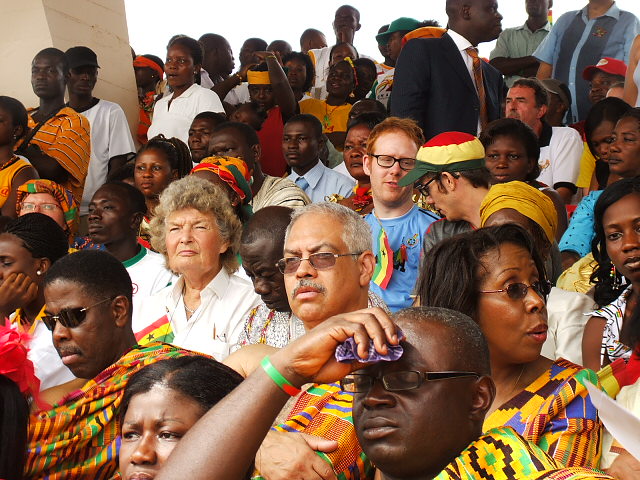
Are Ghanaians primarily Black or White?
Ghanaians are overwhelmingly of Black African descent. According to the Ghana Statistical Service (GSS) Population and Housing Census, Black Africans comprise over 98% of the national population. Indigenous ethnic groups—including the Akan, Mole-Dagban, Ewe, and Ga-Adangbe—form the foundation of the country’s rich cultural tapestry.
The Ministry of Foreign Affairs (Ghana) and the Ghana Immigration Service record small, expatriate communities residing primarily in urban centers like Accra and Kumasi. These minority populations include individuals of European, Asian, and Middle Eastern descent who contribute to the nation’s growing diplomatic and commercial sectors.
Table showing racial distribution of Ghana
| Ethnic Group Category | Approximate Population Share | Primary Regions |
|---|---|---|
| Black African (Indigenous) | 98.3% | Nationwide |
| Non-African / Expatriate Minority | 1.7% | Greater Accra, Ashanti |
Academic Insights and Scientific Consensus
Research from the University of Ghana and the University of Cape Coast confirms deep genetic continuity among West African populations. Anthropological studies published in the Journal of African History trace the lineage of modern Ghanaians back centuries, highlighting minimal demographic shifts prior to European contact.
Geneticists studying haplogroups in the region emphasize that the indigenous population reflects millennia of adaptation to the West African climate and ecology.
Geneticists studying haplogroups in the region emphasize that the indigenous population reflects millennia of adaptation to the West African climate and ecology.
“Ghanaian demographics represent a stable, indigenous West African lineage with rich cultural substructures that have remained remarkably resilient across centuries.” — Department of Archaeology and Heritage Studies, University of Ghana
Cultural Identity and the Global Diaspora
Identity in Ghana extends beyond simple racial categorization. The Office of the President of Ghana and the Ghana Tourism Authority actively promote initiatives like the “Beyond the Return” campaign. This government-backed program encourages the global African diaspora to reconnect with their heritage.
Interviews conducted by the Ghana News Agency (GNA) during recent Pan-African Historical Theatre Festival (PANAFEST) events in Cape Coast highlight how Ghana serves as a spiritual and cultural home for people of African descent worldwide.
Key Drivers of Modern Demographic Shifts:
- The “Beyond the Return” Initiative: Attracting thousands of diasporan returnees annually.
- Urbanization: The Accra Metropolitan Assembly reports rising numbers of international professionals relocating to the capital.
- Economic Partnerships: Increased foreign direct investment brings diverse expatriate workers to regional hubs.
Forecasts (2025–2035)
Demographic forecasters at the Greater Accra Regional Coordinating Council project that while Ghana will remain overwhelmingly Black African, the next decade will see a 0.5% incremental rise in cosmopolitan diversity. As infrastructure projects spearheaded by the Parliament of Ghana draw international talent, Accra will solidify its status as a vibrant, multicultural hub while steadfastly retaining its distinct West African identity.


