


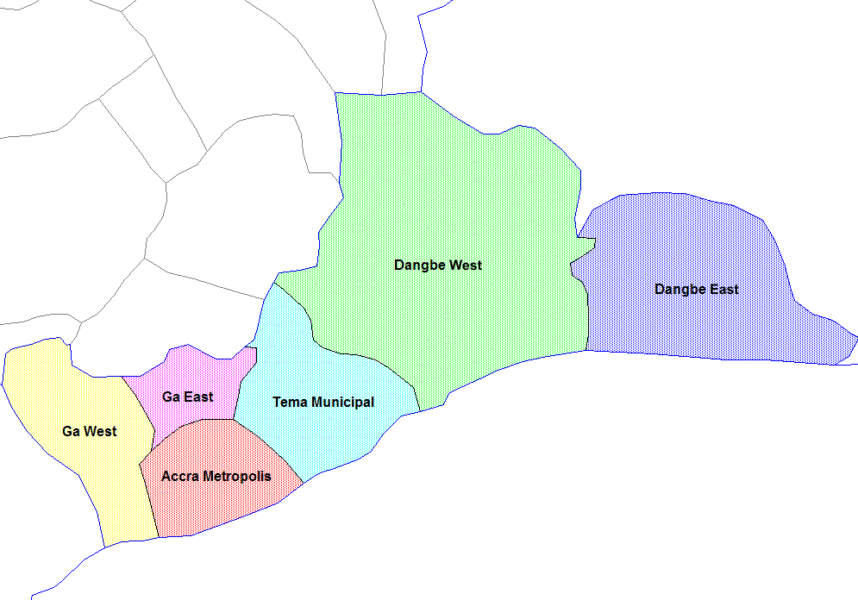
Professionals engaging with Ghana often encounter the terms “Accra” and “Greater Accra,” sometimes using them interchangeably. While closely related, these designations represent distinct geographical and administrative entities. For informed business decisions, urban planning, and accurate data interpretation, understanding this key difference proves essential. This guide clarifies the relationship between the city and its encompassing region.
The Core Capital City
The capital primarily encompasses the metro section of the city and the designated capital city of Ghana. It functions as the nation’s political, economic, and cultural nucleus. Within it, you find significant landmarks, government ministries, major financial institutions, the central business district (CBD), and historical sites. Key neighborhoods like Osu, Ridge, Ministries, and Jamestown form the vibrant heart of the city.
The Metropolis is characterized by its high population density, intensive commercial activity, and extensive urban infrastructure. It serves as Ghana’s primary port of entry for air travel and a significant hub for services, commerce, and innovation.
Understanding Greater Accra
The region, in contrast, constitutes one of Ghana’s sixteen administrative regions. This expansive region includes the city itself, along with numerous surrounding municipalities, districts, and communities. Think of it as the larger metropolitan area and its periphery.
Districts within the administrative demarcation extend beyond the core city to include significant areas like Tema (a major industrial and port city), Ga East, Ga West, Ga Central, Adenta, Ledzokuku, and Kpone Katamanso. These areas contribute diverse economic activities, ranging from industrial manufacturing and logistics to residential developments, agriculture, and tourism. The Greater Accra Regional Coordinating Council oversees the administration of the entire region.
Key Distinctions for Professionals
The fundamental difference lies in scope: Accra is a city, while Greater Accra is an administrative region that contains the city.
- Geographical Scope: Accra represents the concentrated urban core. Greater Accra encompasses a much larger landmass, including coastal stretches, suburban areas, and even some rural pockets, alongside the capital city.
- Administrative Authority: The Metropolitan Assembly governs the city. The Regional Coordinating Council oversees the broader region, coordinating development and administration across its various districts.
- Demographics and Lifestyle: The city experiences intense urban living, high traffic, and a bustling metropolitan atmosphere. Greater Accra offers a wider spectrum, from the dense city environment to more suburban, residential, and industrial zones, providing varied lifestyles and operational environments.
- Economic Focus: While the Metro drives significant service, financial, and retail sectors, the region diversifies its economy with major industrial zones in Tema, extensive logistics networks, and emerging tech hubs in its various districts.
Why This Distinction Matters
Understanding this geographical and administrative separation holds substantial value for various professional fields:
Investment and Business Strategy: For market entry or expansion, distinguishing between the city and the region helps identify specific target demographics, infrastructure accessibility, and regulatory nuances. Investment in “Accra” might target dense urban consumers, while “Greater Accra” could include industrial land acquisition or logistics network development.
Urban Planning and Development: Planners and developers must recognize the regional context to implement sustainable solutions for housing, transportation, and infrastructure that serve both the core city and its expanding peripheries.
Data Analysis and Reporting: Accurate interpretation of economic indicators, population statistics, and social data depends on understanding whether reports refer to the concentrated city or the broader region. Misinterpreting this can lead to flawed insights and misguided policy recommendations.
Logistics and Supply Chain: Businesses establish distribution centers and supply routes considering the entire region, not just the city center, to efficiently serve diverse markets.
Relocation Decisions: Expats and businesses relocating often weigh factors like commute times, housing affordability, and school access across the broader region, not just within the city.
Summary of article
In summary, while the city of Accra anchors the Greater Accra Region, they are not synonymous. Professionals must acknowledge this crucial distinction to navigate Ghana’s vibrant capital landscape effectively, ensuring informed strategic decisions and precise operational planning.


